
START WITH THE VIEW
What Do You Want the Trees to Block?
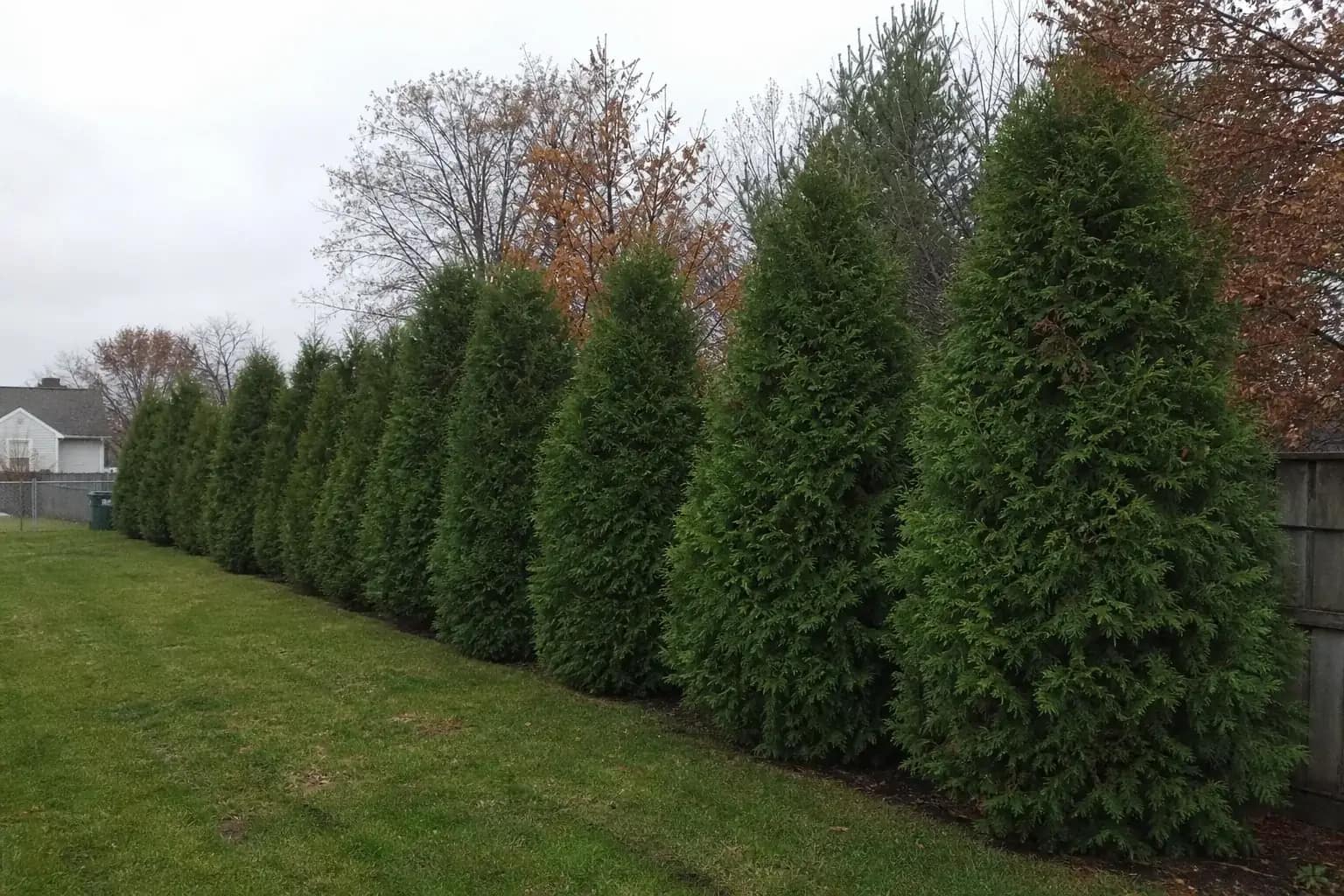
Privacy looks different from one property to the next.
A row beside a patio may need to block the view from a neighboring window. Trees along a road may need enough height and length to soften headlights and traffic. A property-line screen may need to work around a fence, gate, utility, or mowing route.
Before choosing the trees, it helps to look at the property from the place where the problem is most noticeable. That might be the patio, pool, kitchen window, driveway, or road.
That view tells us where the screen should begin, how far it should run, and how much height it needs.
You do not need to know the exact tree before contacting us. A photograph of the view and a short explanation of what you want to change are enough to begin.
CHOOSING THE TREES
Green Giant, Emerald Green, or Something Else?
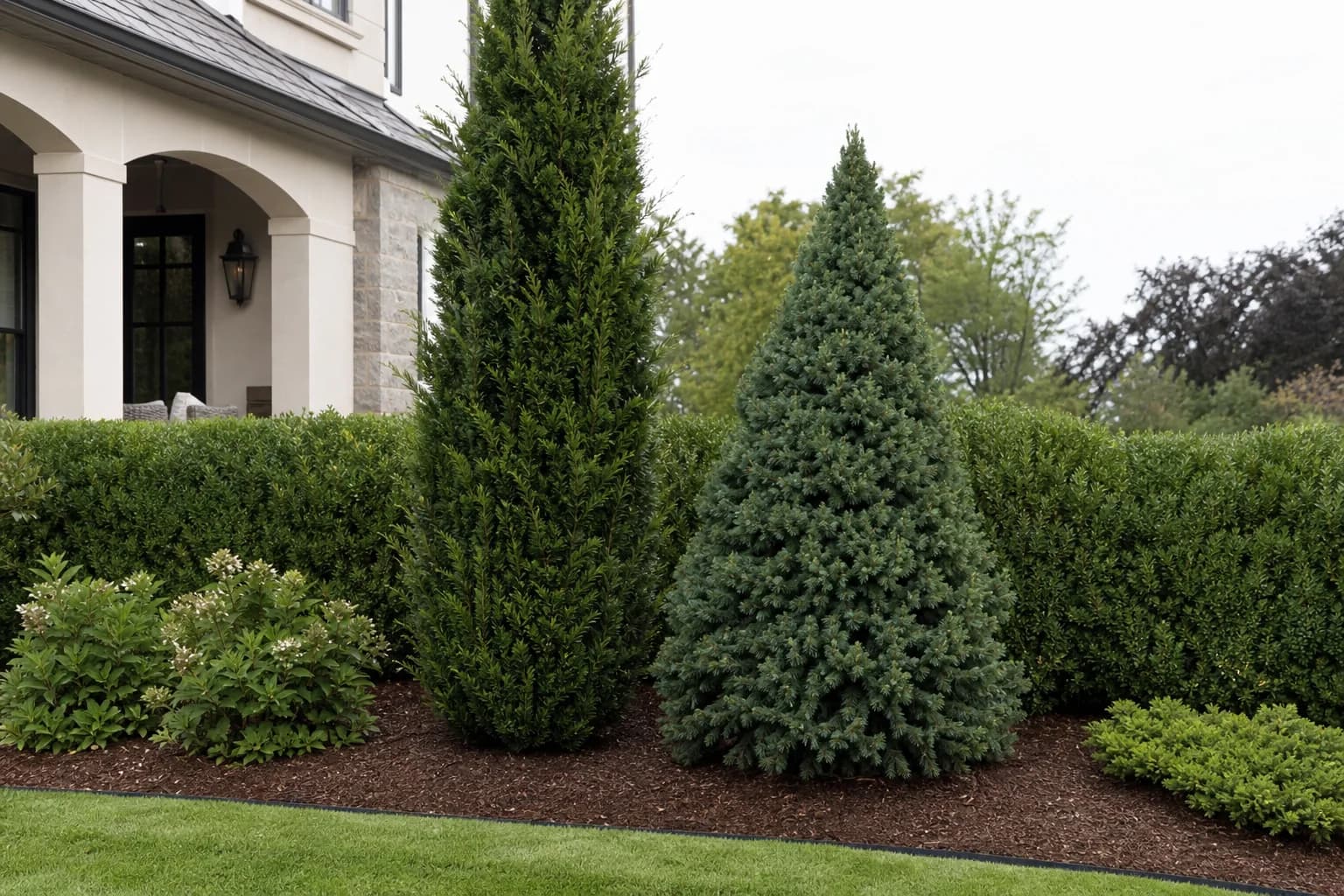
Green Giant and Emerald Green arborvitae are both commonly used for privacy, but they do not create the same screen.
Green Giant arborvitae can work well where there is room for a taller and wider evergreen. Emerald Green arborvitae stays narrower and may be a better fit beside patios, fences, and other areas with less available width.
They are not the only options. The amount of sunlight, drainage, available space, desired height, and overall look of the property may point toward another evergreen or a layered planting.
The goal is not to choose the most popular tree. It is to plant a screen that fits the property after the trees have grown.
Our guide to the best evergreen trees for Kentucky provides a broader comparison of privacy and landscape options.
LAYING OUT THE ROW
Spacing for Coverage Without Crowding
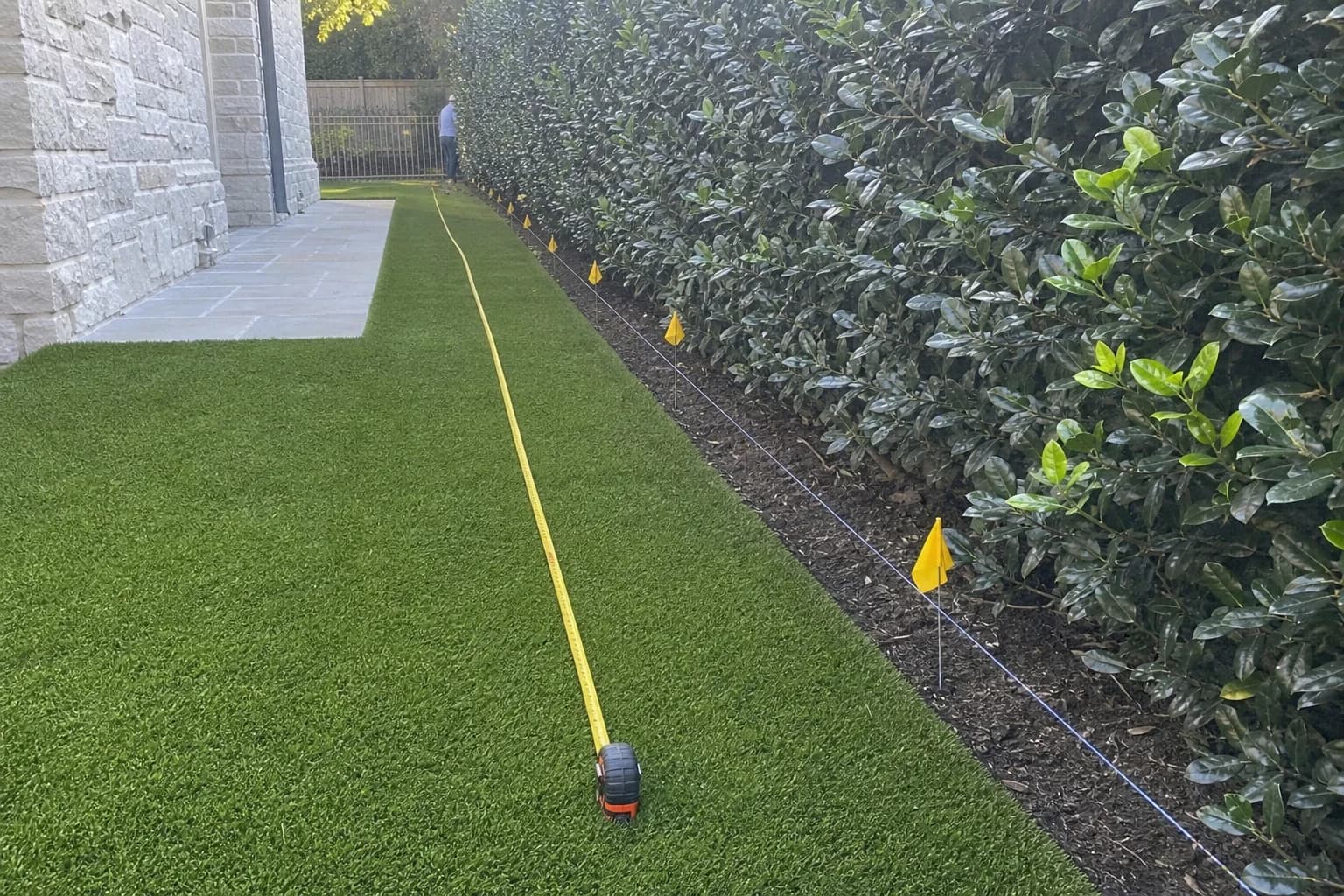
Plant privacy trees too far apart and the screen may take longer than expected to fill in. Plant them too close and the trees can become crowded as they grow.
We plan spacing around the variety, starting size, expected mature width, row length, and how quickly you want coverage.
The layout also needs to leave practical room around fences, corners, gates, utilities, and mowing areas. A straight row may be right for a clean boundary. A staggered or layered planting may work better when the sightline is uneven or the property has more depth.
Spacing is not one number copied from a chart. It is part of the plan for the entire screen.
PLAN FROM THE PROPERTY
Plan the Screen From Where You Will Use the Property
Standing at the property line only tells part of the story. A row that blocks the view while you are standing in the lawn may still leave the patio or kitchen window exposed. A screen planted directly against a fence may not have enough room to develop the way the customer expected.
We look at the view from the places that matter to you.
That can change the starting point, tree height, row length, and whether one row is enough.
It is a small step, but it prevents a common disappointment: planting a long row of healthy trees that does not actually solve the privacy problem.
A LEXINGTON PROJECT
Privacy Behind a New Fence in Lansdowne
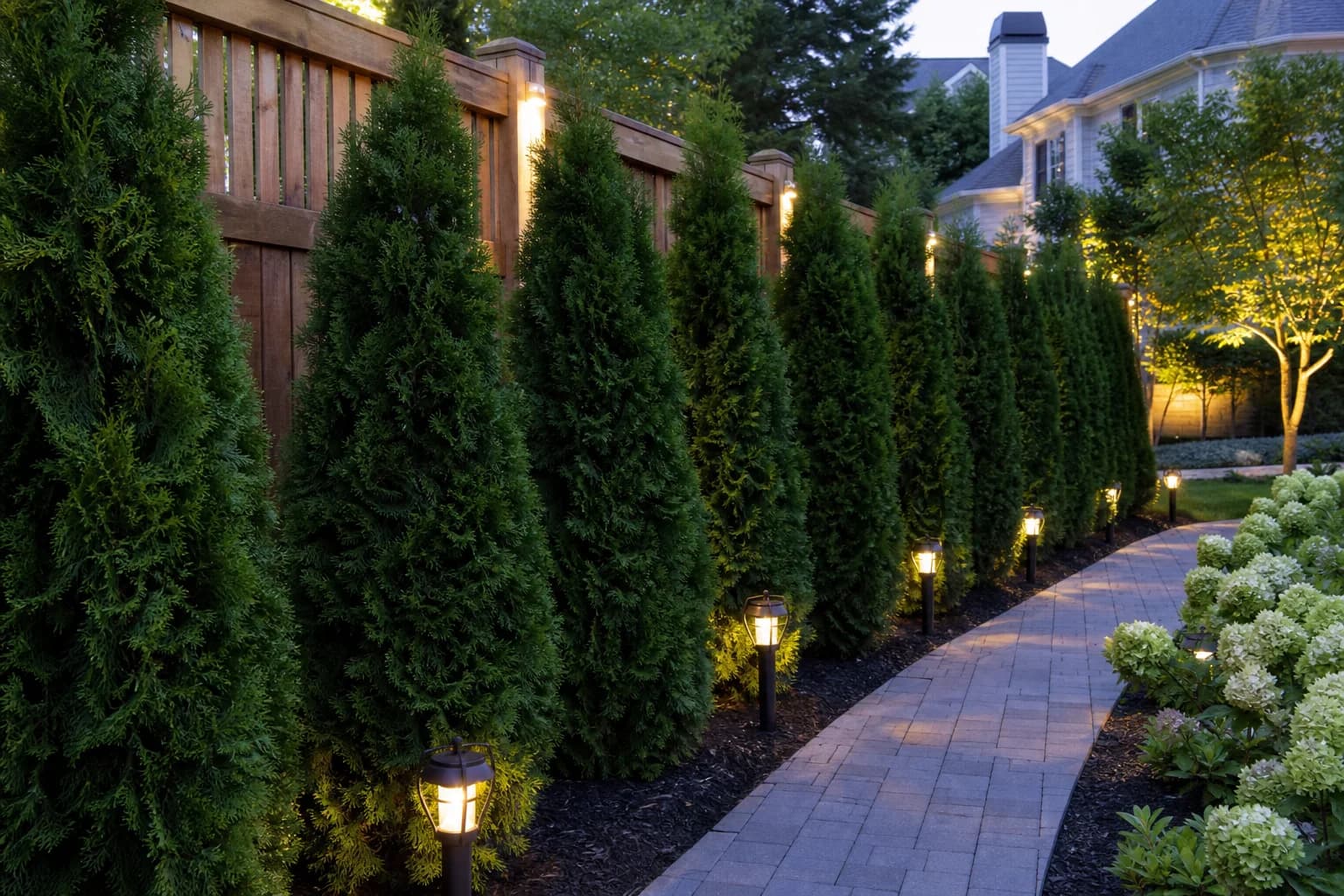
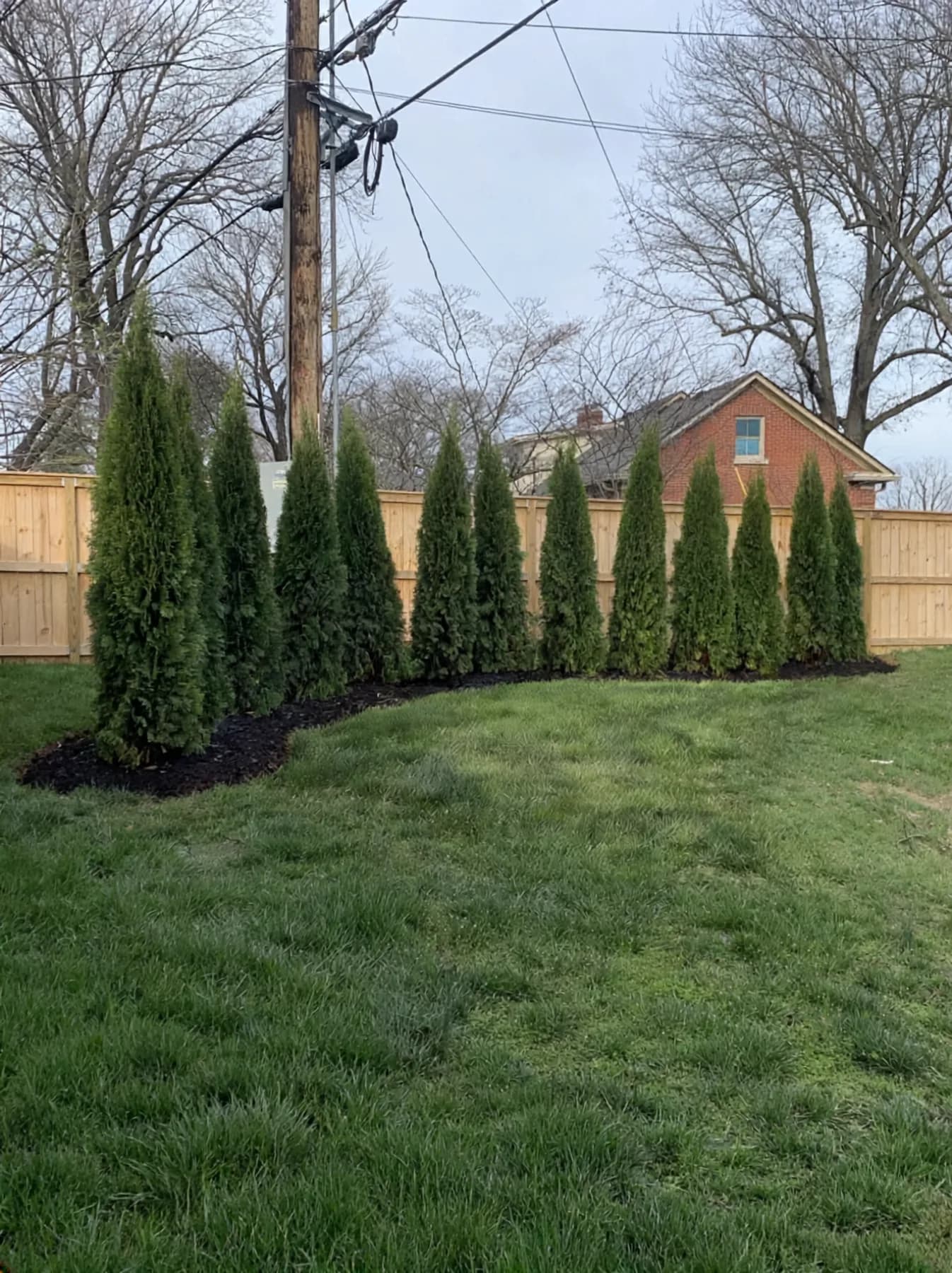
A homeowner in Lexington's Lansdowne neighborhood wanted more privacy behind a newly built wood fence.
The arborvitae row needed to add evergreen height, soften the fence line, and provide screening through every season. The layout also had to follow the curve of the backyard planting bed while accounting for the available yard space, neighboring views, and overhead lines.
After planting, the row was finished with mulch and watered to begin the establishment period. The fence provides immediate separation while the arborvitae add living height and a softer backyard view.
See the Lexington arborvitae privacy row projectAFTER PLANTING
The First Year Matters
A privacy row is only as strong as the trees in it. One struggling evergreen can eventually become a visible opening in the screen.
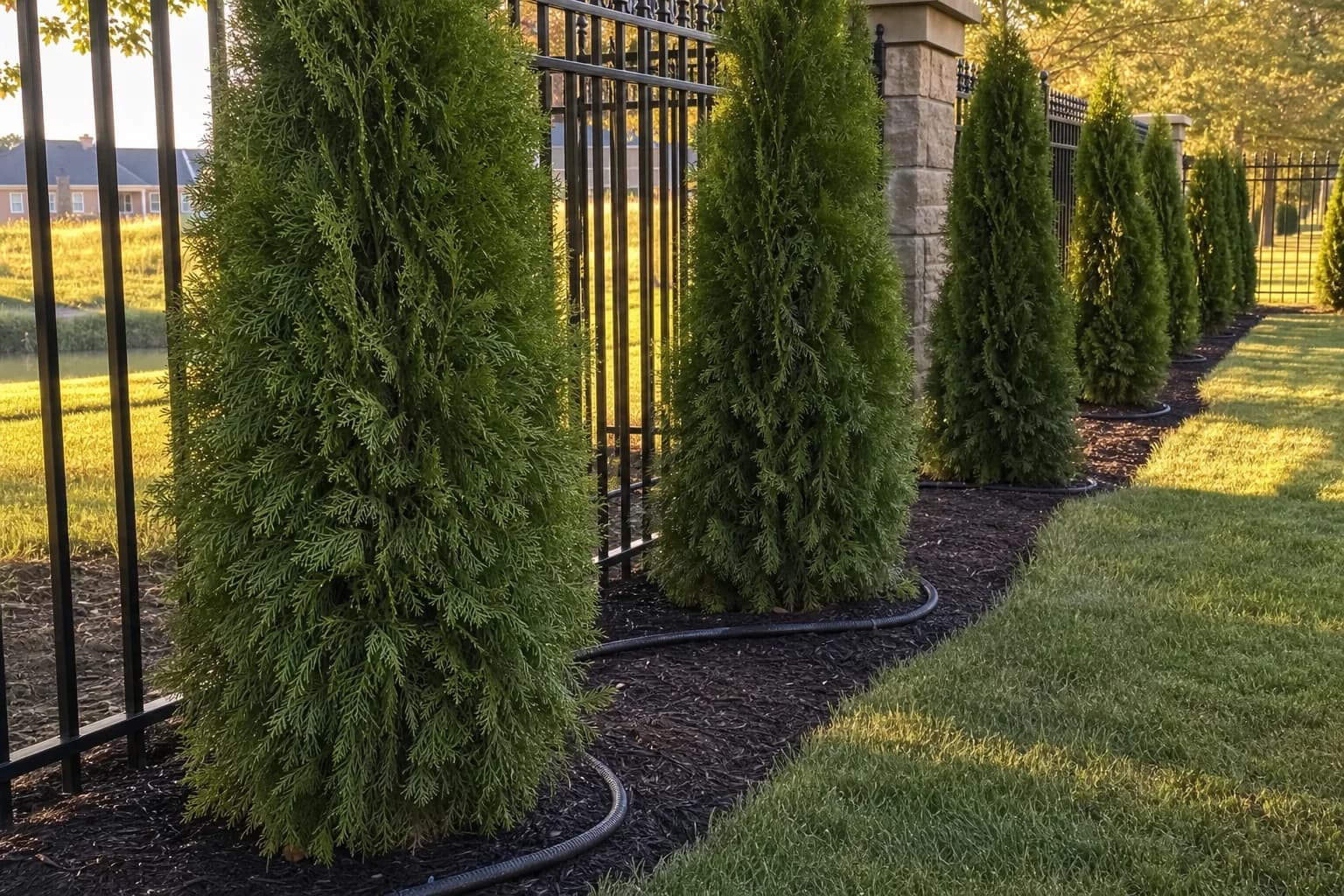
Newly planted arborvitae need consistent watering while their roots establish. Hot weather, wind, and dry soil can increase how quickly the root balls lose moisture.
After planting, we explain the initial watering expectations and provide a watering guide. Qualifying installations are backed by our one-year limited plant warranty when the watering guide is followed.
FAQ
Common Questions
How many privacy trees will I need?
The number depends on the length of the screen, the evergreen variety, the starting size, and the planned spacing. A photograph and an approximate measurement can help us begin estimating the row.
Should I plant Green Giant or Emerald Green arborvitae?
Green Giant generally needs more room and can create a taller, wider screen. Emerald Green stays narrower and may fit better in tighter residential spaces. Sunlight, drainage, available width, and the desired height all affect the decision.
Can arborvitae be planted near a fence?
Yes, but the row needs enough distance from the fence for the trees to develop. We consider mature width, access, the neighbor's side, and future maintenance before laying out the row.
How soon will the trees provide privacy?
That depends on the starting size, variety, spacing, growing conditions, and the amount of coverage you expect. Larger starting trees provide more immediate screening, but every row still needs time and consistent care to establish.
What affects the cost of a privacy tree row?
The tree variety, starting size, number of trees, row length, delivery, property access, and site conditions all affect the estimate.
START WITH A PHOTO
Show Us the View You Want to Change
Send us the property address and a photograph taken from the place where the privacy problem is most noticeable. Tell us what you want blocked and how soon you would like more coverage. If you know the approximate row length or have a tree preference, include it. If you do not, that is fine. We can help work through the options.