
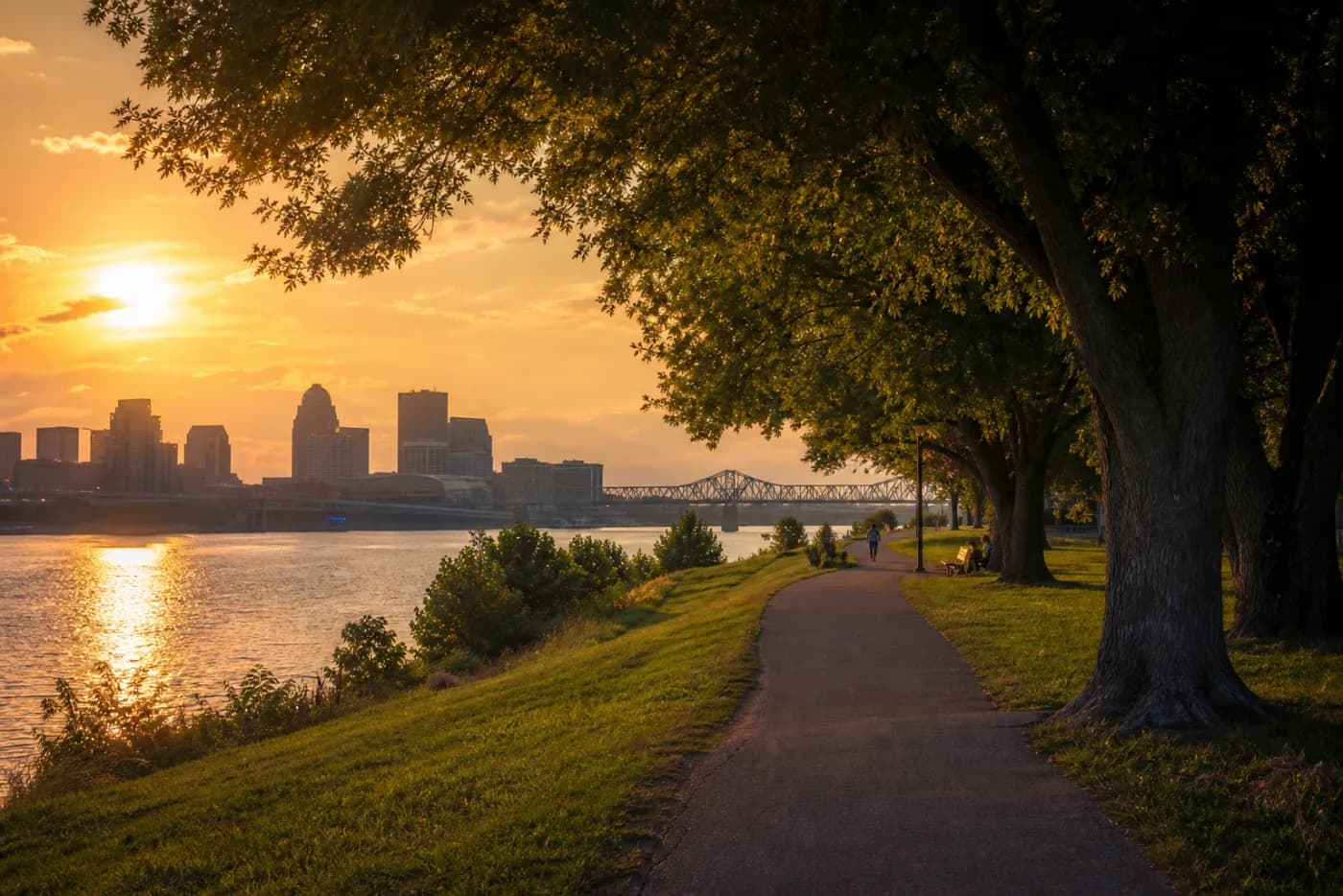
A CITY SHAPED BY TREES
Louisville Has Been Designing With Trees for More Than a Century
Louisville's Olmsted parkways were planned as tree-lined connections between neighborhoods and parks. Their value is still visible today.
A private property operates at a smaller scale, but the basic lesson holds. A tree should do more than occupy an empty patch of lawn. It should provide shade, frame an entrance, screen an unwanted view, soften a large building, or add structure to an open property.
We begin by identifying that job.
Read about Louisville's Olmsted parkwaysSELECTIVE KENTUCKY TRAVEL
When a Louisville Project Fits
We review the property address, tree count, access, delivery route, photographs, and desired timing before confirming whether the project makes sense.
BEFORE PLANTING NEAR A STREET
Private Property and the Public Right of Way
Louisville Metro distinguishes private property from the public right of way. Planting between a street and sidewalk, or in another public area, may require city review or a permit.
If the proposed tree is close to the street, confirm the property boundary before the planting plan is approved.
Review Louisville Urban Forestry permit guidanceFAQ
Common Questions
Do you travel to Louisville for one tree?
Usually, Louisville is a better fit for multiple trees, a large tree, a privacy row, or another substantial planting scope. Send the details and we will give you a direct answer.
Do I need a permit to plant near the street?
Possibly. Louisville Metro requires permits for planting in the public right of way. Private-property planting is different, but the boundary should be confirmed when the location is close to a street or sidewalk.
START WITH THE PROPERTY
Tell Us About the Louisville Property and the Full Planting Scope
Send the address, number and type of trees, planting-area photographs, access photographs, and preferred timing so we can review whether the trip is a fit.