
START WITH THE FINISHED ROW
Spacing Is Not One Number
A privacy row can look full on planting day and still be wrong for the property five years later.
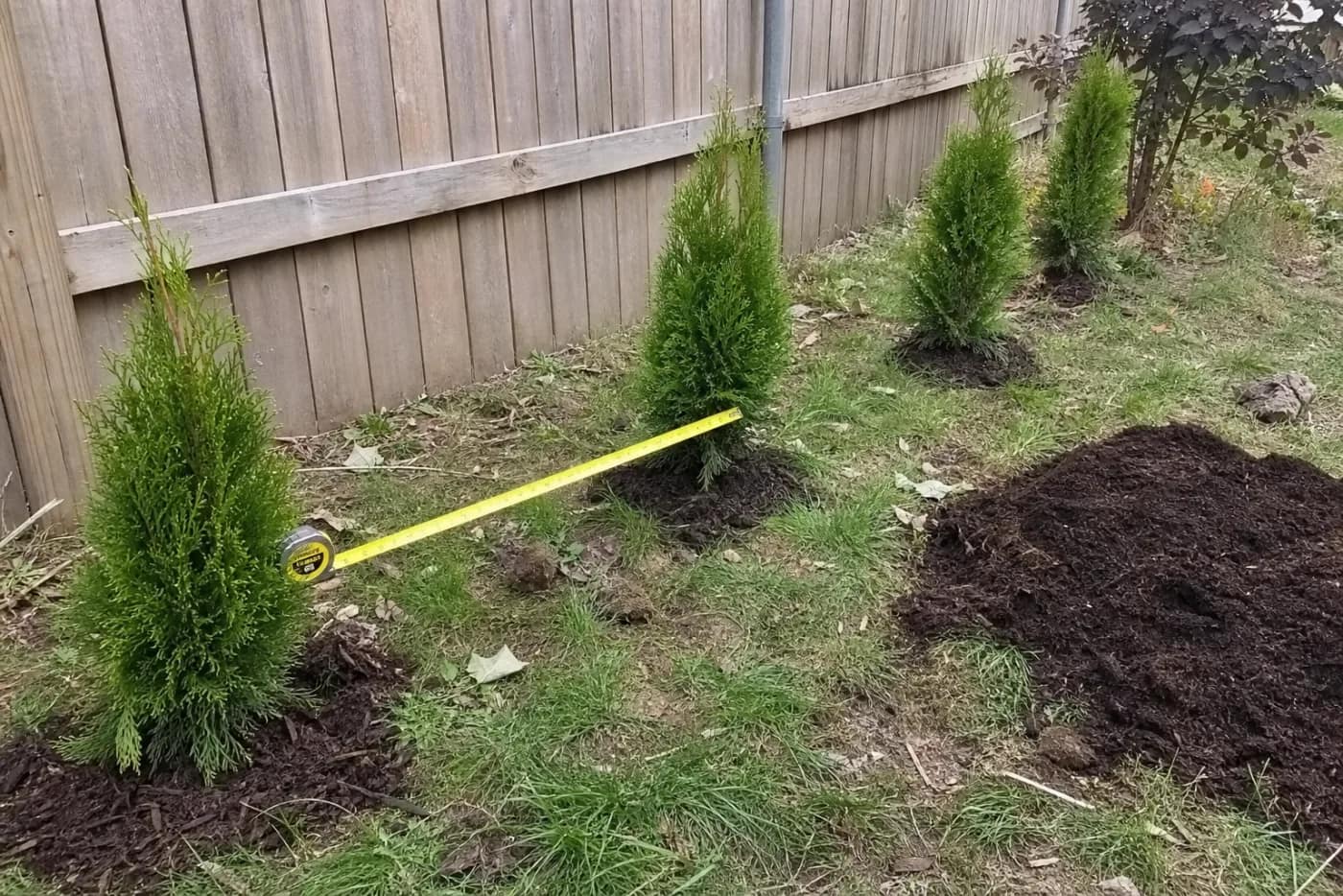
Trees placed too close together may compete for the same space and become harder to maintain. Trees placed too far apart may leave the exact gaps the row was supposed to close. A variety that works beside an open field may be much too wide for the narrow strip between a fence and a patio.
Orlando has laid out and planted arborvitae rows across Kentucky. Before a hole is dug, he wants to know what needs to be blocked, how much width the row has, and whether the homeowner wants a narrow formal line or a larger natural screen.
GREEN GIANT OR EMERALD GREEN
They Do Not Create the Same Screen
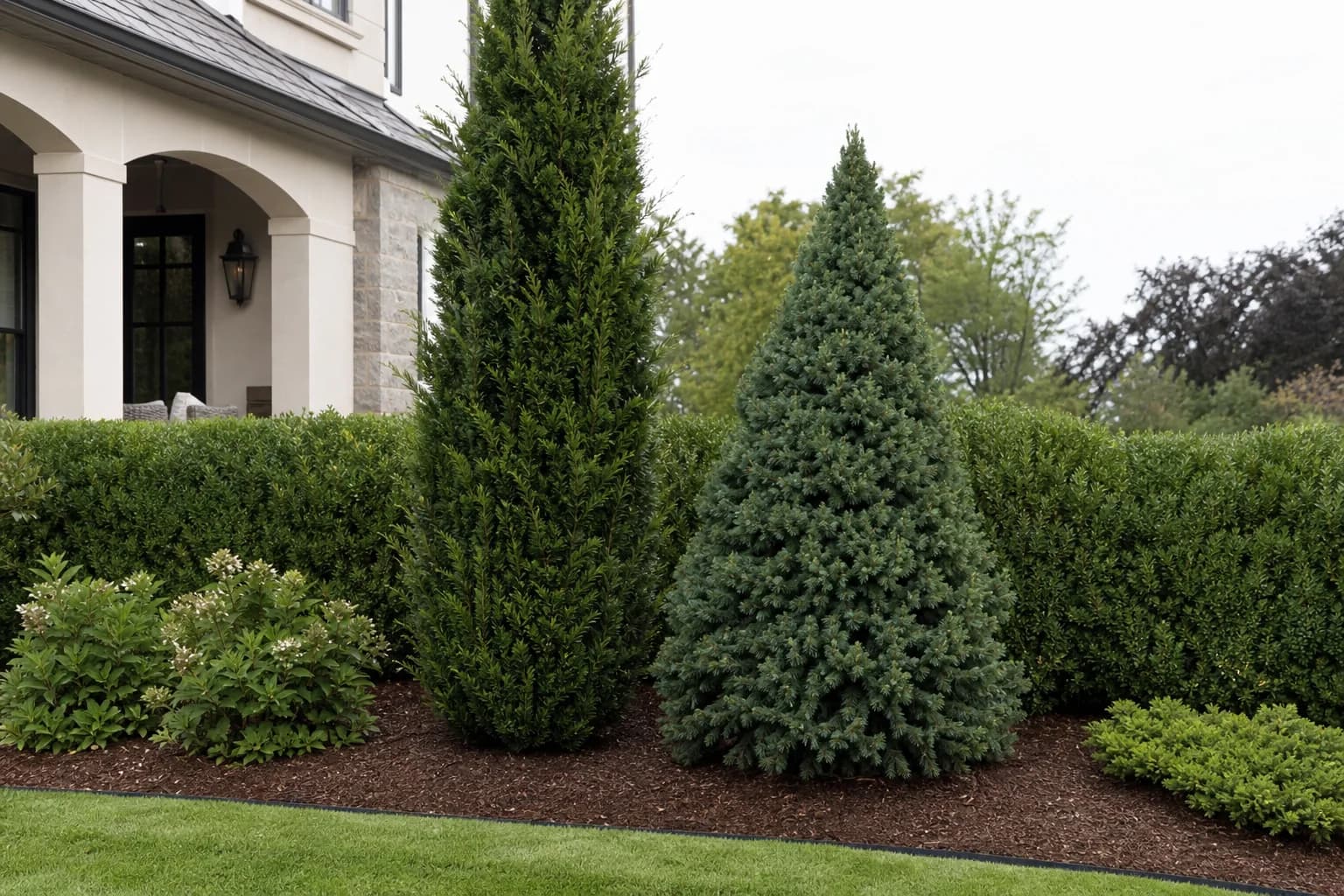
The variety changes the height, width, spacing, and finished character of the row.
Green Giant arborvitae can become a large evergreen tree. It is useful where the property needs substantial height and has room for the width. Emerald Green stays much narrower and shorter, which often makes it easier to use around residential yards, patios, and tighter fence lines.
Neither is automatically the better tree. The better choice is the one that fits the available space and the privacy problem without creating a new problem as it matures.
Learn about our evergreen and privacy tree planting service.PRACTICAL STARTING POINTS
How Far Apart Should Arborvitae Be Planted?
These ranges are useful starting points for a connected privacy row. The final distance may change with the cultivar, starting size, available width, desired appearance, and layout.
| Variety | Documented mature size | Common hedge spacing | Typical fit |
|---|---|---|---|
| Green Giant arborvitae | 40 to 60 feet tall and 12 to 18 feet wide | 5 to 6 feet on center for a hedge | Properties with room for a taller, wider evergreen screen |
| Emerald Green arborvitae | 12 to 14 feet tall and 3 to 4 feet wide | About 2 to 3 feet on center for a connected hedge | Narrower residential spaces and more formal-looking rows |
On center means measuring from the center of one trunk to the center of the next. It does not mean measuring the open space between the foliage.
BEFORE THE FIRST HOLE
Four Decisions Shape the Entire Row
- 01
What needs to disappear from view?
A patio, road, second-story window, and open property line do not require the same height or the same planting layout.
- 02
How much width does the row have?
The young trees may fit almost anywhere. The mature trees need room beside fences, neighboring property, buildings, drives, and other plantings.
- 03
How soon do you want the row to feel complete?
Starting size and spacing both affect early coverage. Crowding extra trees into the row is not a substitute for choosing the right starting size.
- 04
Can the row be watered consistently?
A long evergreen screen creates a long line of new root balls. The watering plan needs to reach every tree during establishment.
ESTIMATING TREE COUNT
How Many Arborvitae Will You Need?
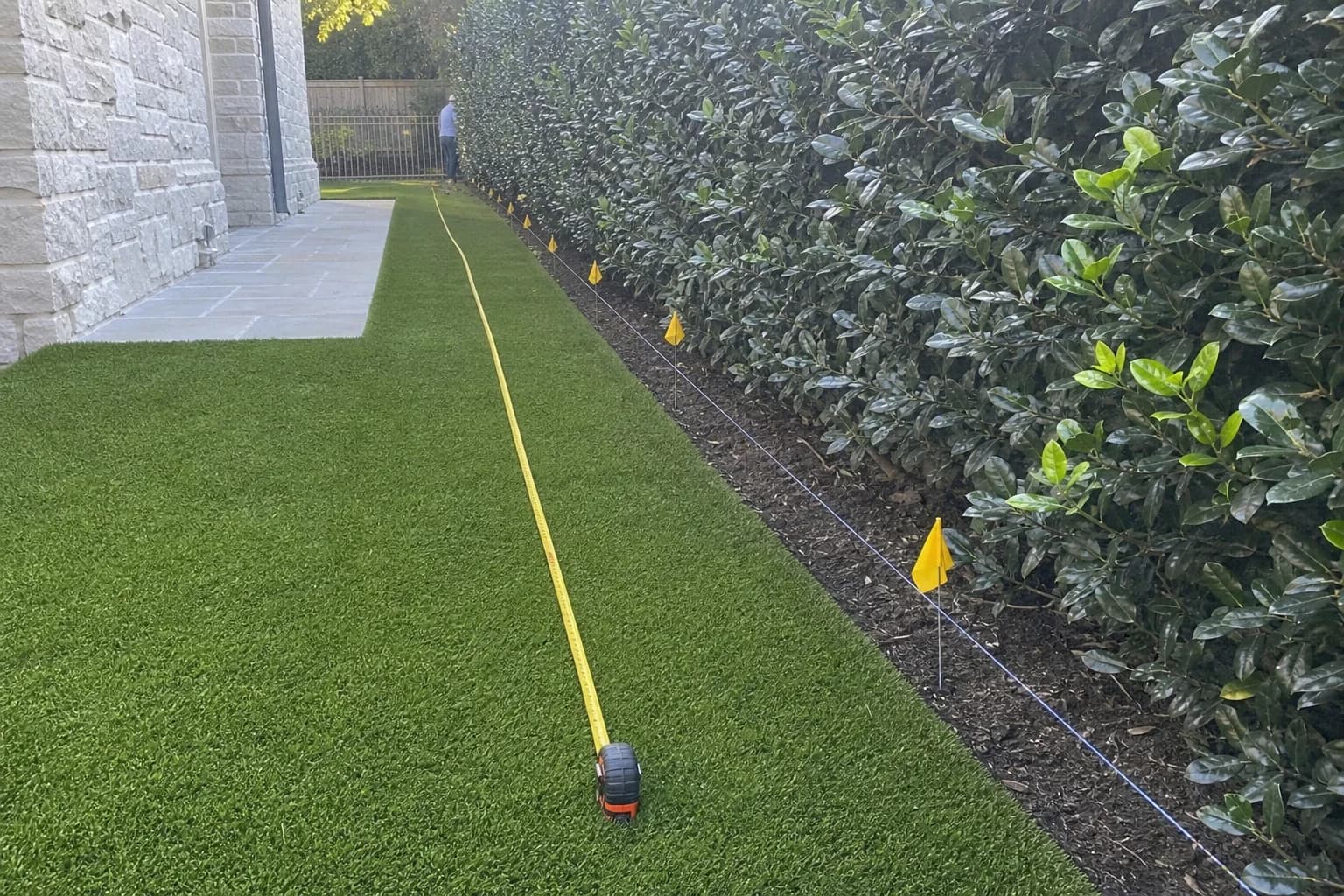
Measure the usable row, choose a realistic spacing, and treat the result as a starting count.
A 60-foot planting line divided by 6-foot spacing starts at about 10 Green Giants. The same length divided by 3-foot spacing starts at about 20 Emerald Greens. The final count can change when the row needs clearance at both ends, follows a curve, turns a corner, or passes a gate.
This is also why we do not recommend ordering trees from a rough visual guess. A few minutes with a tape measure can prevent buying too many trees or discovering that the row stops short.
STRAIGHT ROW OR STAGGERED SCREEN
The Property Should Decide the Layout
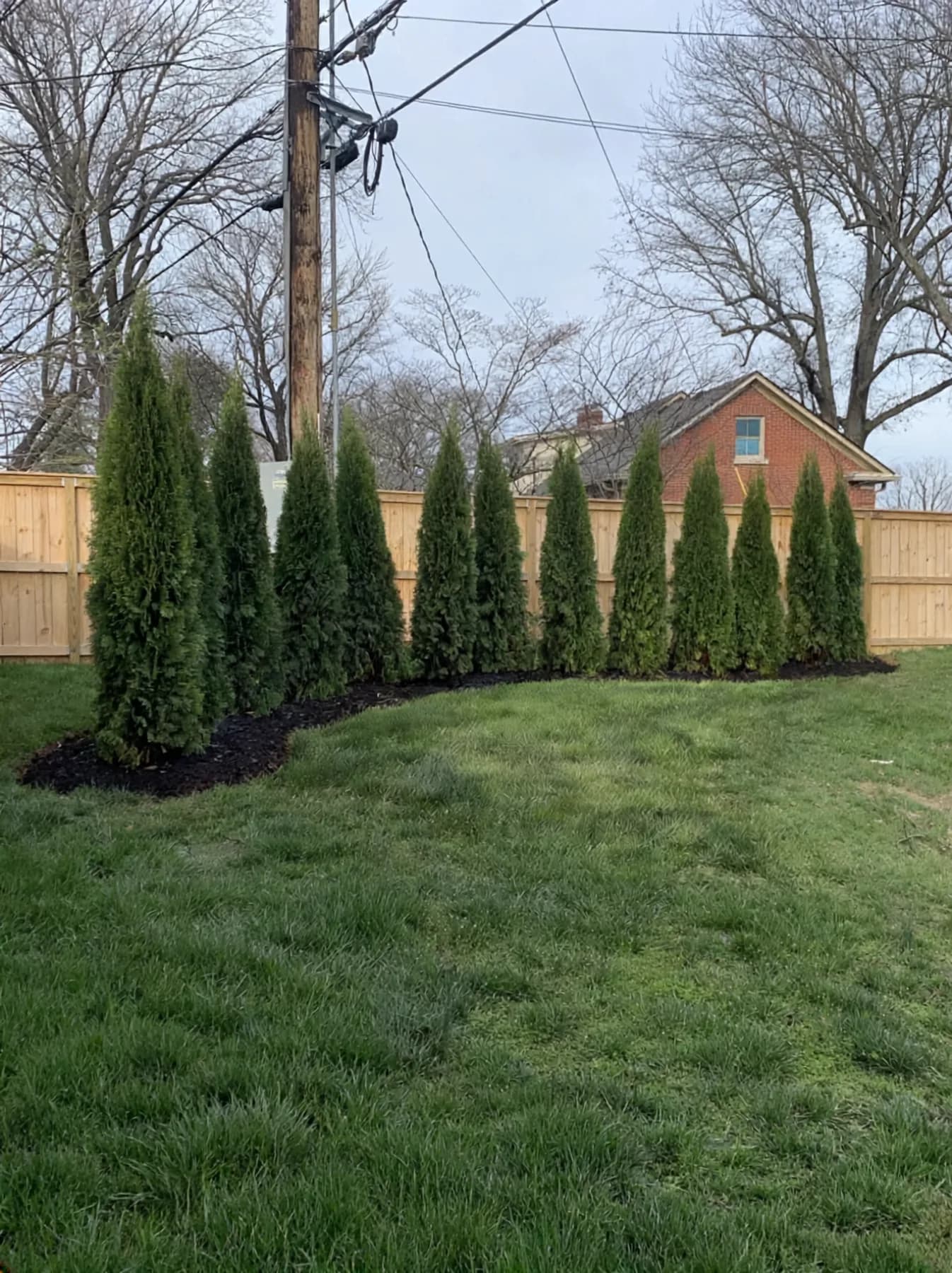
A single row usually uses less width and creates a clean line beside a fence or property edge. A staggered row requires more planting depth, but it can create a layered screen on a larger property.
Neither layout should cross a property line or place mature branches where the neighboring owner must maintain them. Fences, corners, overhead lines, gates, and access for future work all belong in the layout decision.
On this Lexington property, the fence provided immediate separation while the arborvitae added living height and year-round screening. The row followed the usable planting area rather than forcing a more complicated layout into a residential backyard.
See the Lexington arborvitae privacy-row project.PLANTING AND ESTABLISHMENT
Privacy Does Not End on Planting Day
Every tree in the row has its own root ball, and every root ball needs consistent moisture while it establishes.
University of Kentucky guidance recommends a planting hole two to three times wider than the root ball, with the upper roots positioned near the soil surface. The site also needs drainage. A deep hole in soil that stays saturated is not an improvement.
After planting, the row should be watered deeply and checked consistently rather than receiving a quick spray across the foliage. Mulch can help hold moisture, but it should not be piled against the trunks.
Read our tree care and warranty instructions.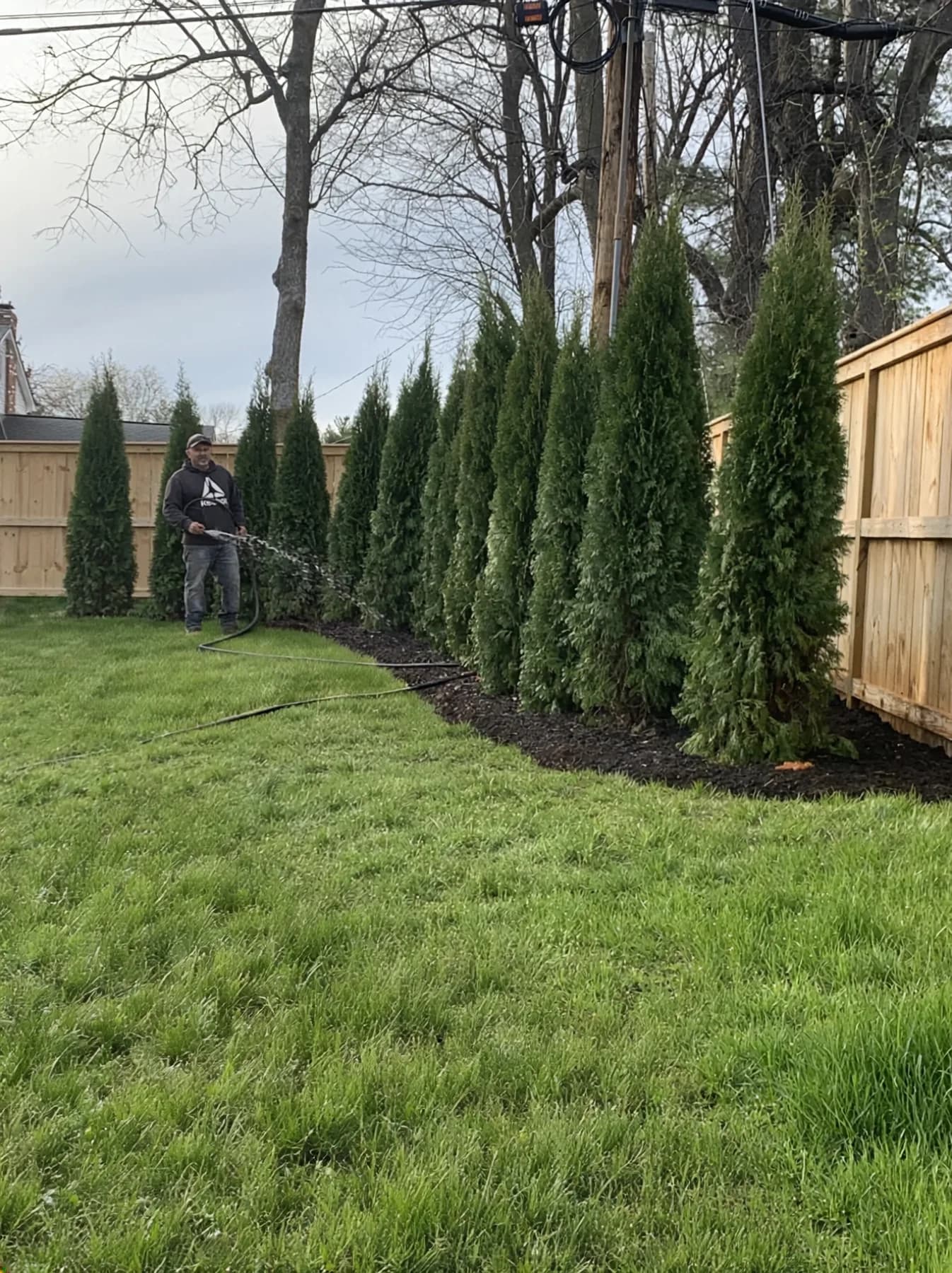
FAQ
Common Questions
How far apart should Green Giant arborvitae be planted?
Five to six feet on center is a common starting point for a Green Giant hedge. The final spacing should account for the desired appearance, available width, starting size, and the tree's documented mature spread.
How far apart should Emerald Green arborvitae be planted?
About two to three feet on center is a common starting point for a connected Emerald Green hedge. This cultivar has a documented mature spread of approximately three to four feet.
Should arborvitae be planted in a straight or staggered row?
A straight row fits narrower planting areas and creates a clean line. A staggered row needs more width and can create a layered screen on a larger property. The available space should decide the layout.
How many arborvitae do I need for a privacy screen?
Divide the usable row length by the planned on-center spacing for a starting count. Then adjust for clearance at the ends, gates, curves, corners, and any places where the row cannot continue.
Can arborvitae be planted beside a fence?
Yes, when the planting line leaves enough room for the selected variety's mature width and future maintenance. The row should remain on your property and account for gates, corners, overhead lines, and neighboring space.
HORTICULTURAL SOURCES
Where the Planting Guidance Came From
Mature sizes and common spacing are planning references, not guarantees. Actual growth depends on the cultivar, soil, drainage, sunlight, weather, care, and room available.
PLAN THE ACTUAL ROW
You Do Not Need the Exact Tree Count Yet
Send the property address, photos of the planting line, the approximate row length, and what you want blocked. We can help determine the arborvitae, spacing, starting size, access, and planting scope.