
START WITH WHAT YOU WANT THE TREE TO DO
Most People Ask Which Evergreen Grows Fastest
Orlando usually asks a different question: How much room do you actually have?
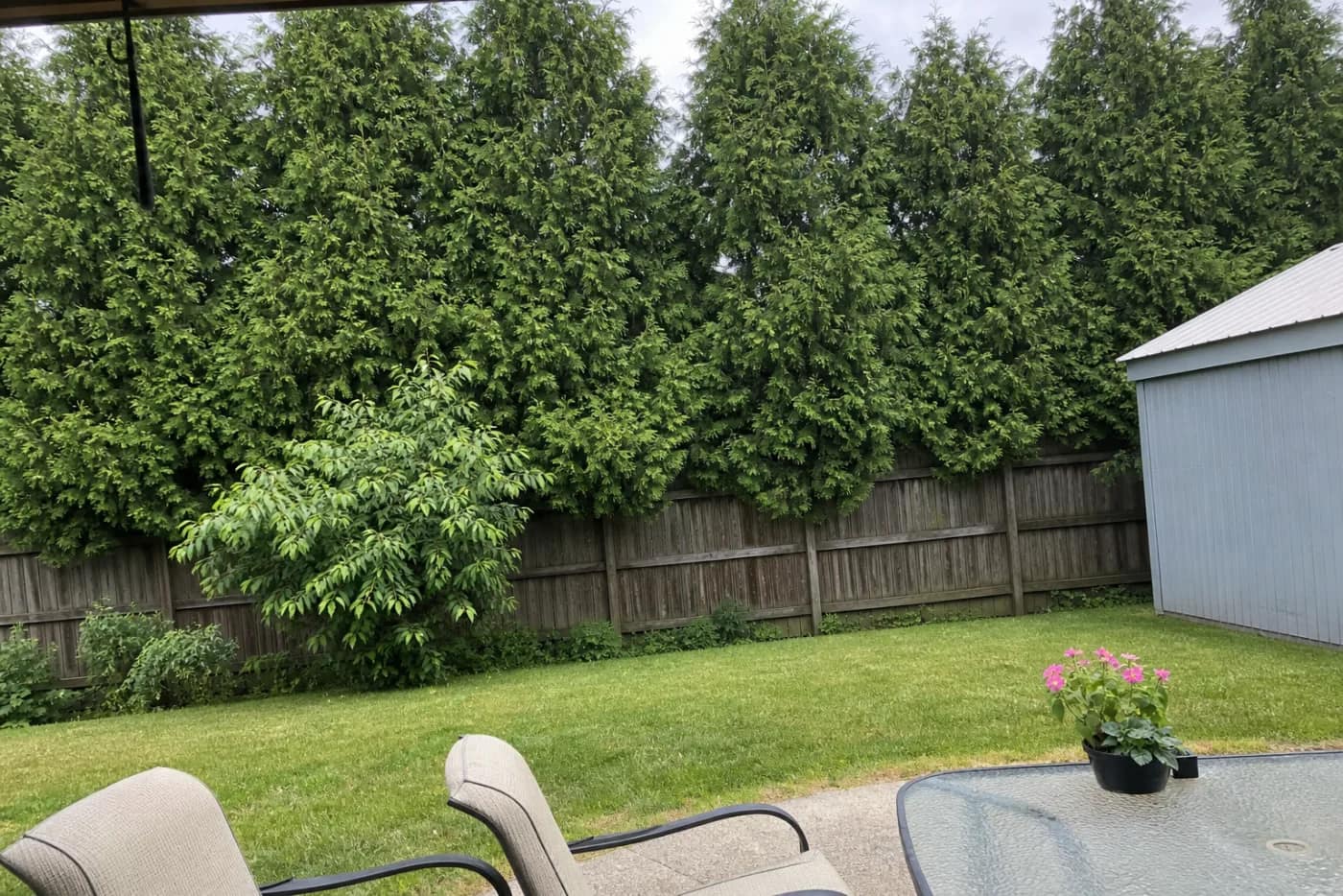
A homeowner rarely begins with a botanical name. They point toward the neighbor's window, the road behind the house, the open edge of a patio, or the long drive that feels unfinished.
That is where the decision starts. Orlando looks at how tall the screen needs to become, how much width the property can give it, and whether the planting should look like a formal row or part of the larger landscape. Sunlight, drainage, access, overhead lines, and the watering plan shorten the tree list quickly.
A fast-growing evergreen is only useful when there is enough room for the tree it becomes.
THE PRACTICAL COMPARISON
Five Evergreen Trees Worth Comparing in Kentucky
Mature sizes are planning references, not promises. Cultivar, soil, sunlight, weather, care, and available growing room affect the finished tree.
| Evergreen | Strongest fit | Documented mature size | Important consideration |
|---|---|---|---|
| Green Giant arborvitae | Tall residential screens with room to spread | 40 to 60 feet tall and 12 to 18 feet wide | Too large for many narrow fence lines |
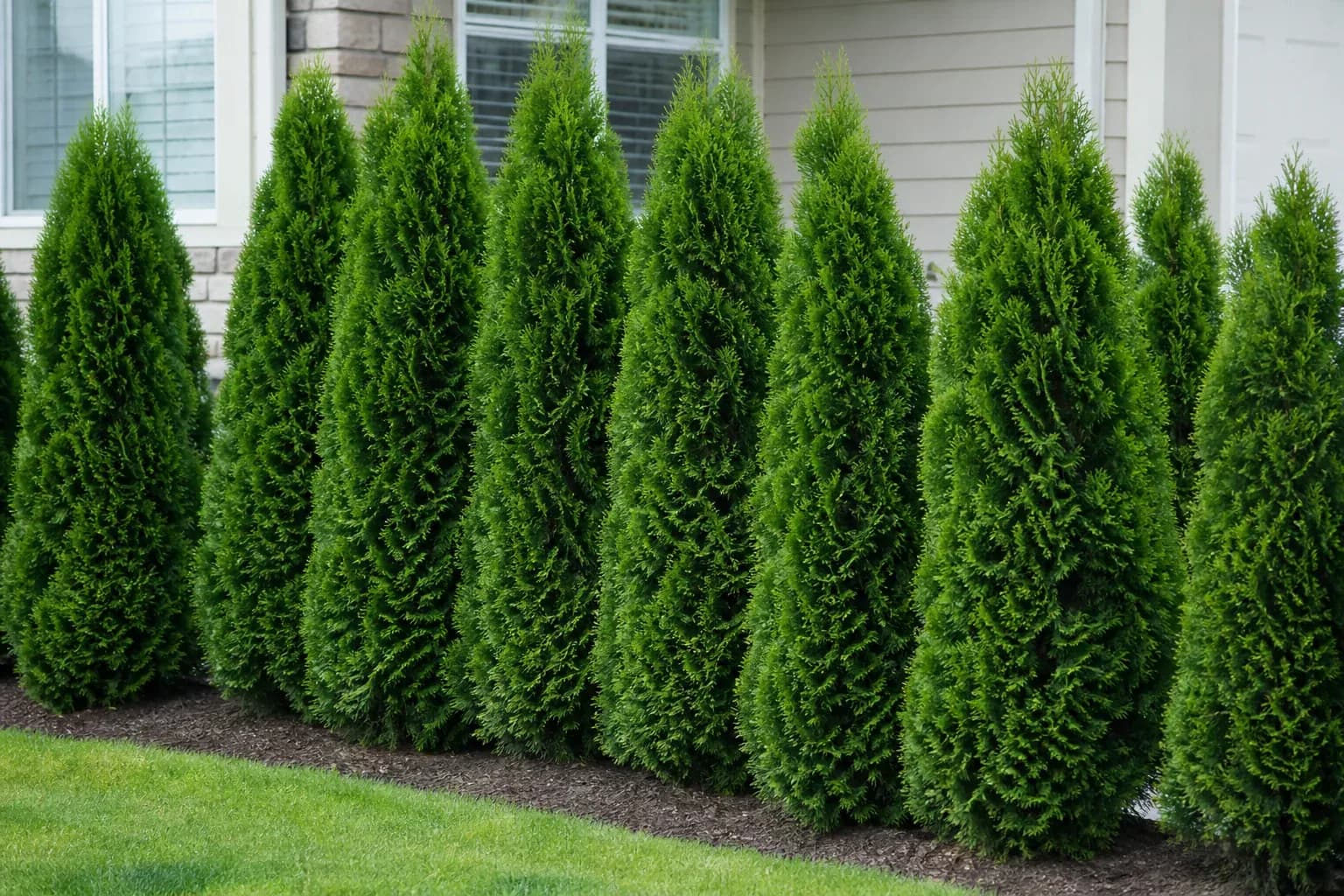
| Emerald Green arborvitae | Narrower, formal residential rows | 12 to 14 feet tall and 3 to 4 feet wide | Needs consistent moisture and protection from drying wind |
| Eastern redcedar | Native screens, farms, natural property edges, and dry sites | Commonly 30 to 65 feet tall, depending on form | Avoid constantly wet sites and consider cedar-apple rust nearby |
| American holly | Broadleaf evergreen structure, mixed screens, and specimen planting | Commonly 40 to 60 feet tall and 10 to 20 feet wide | Slow growing and not a good fit for alkaline soil |
| Norway spruce | Large properties, estate entrances, and substantial evergreen structure | Approximately 40 to 60 feet tall and 25 to 30 feet wide | Needs considerable room and a suitable, well-drained site |
GREEN GIANT OR EMERALD GREEN
Two Arborvitae With Very Different Futures
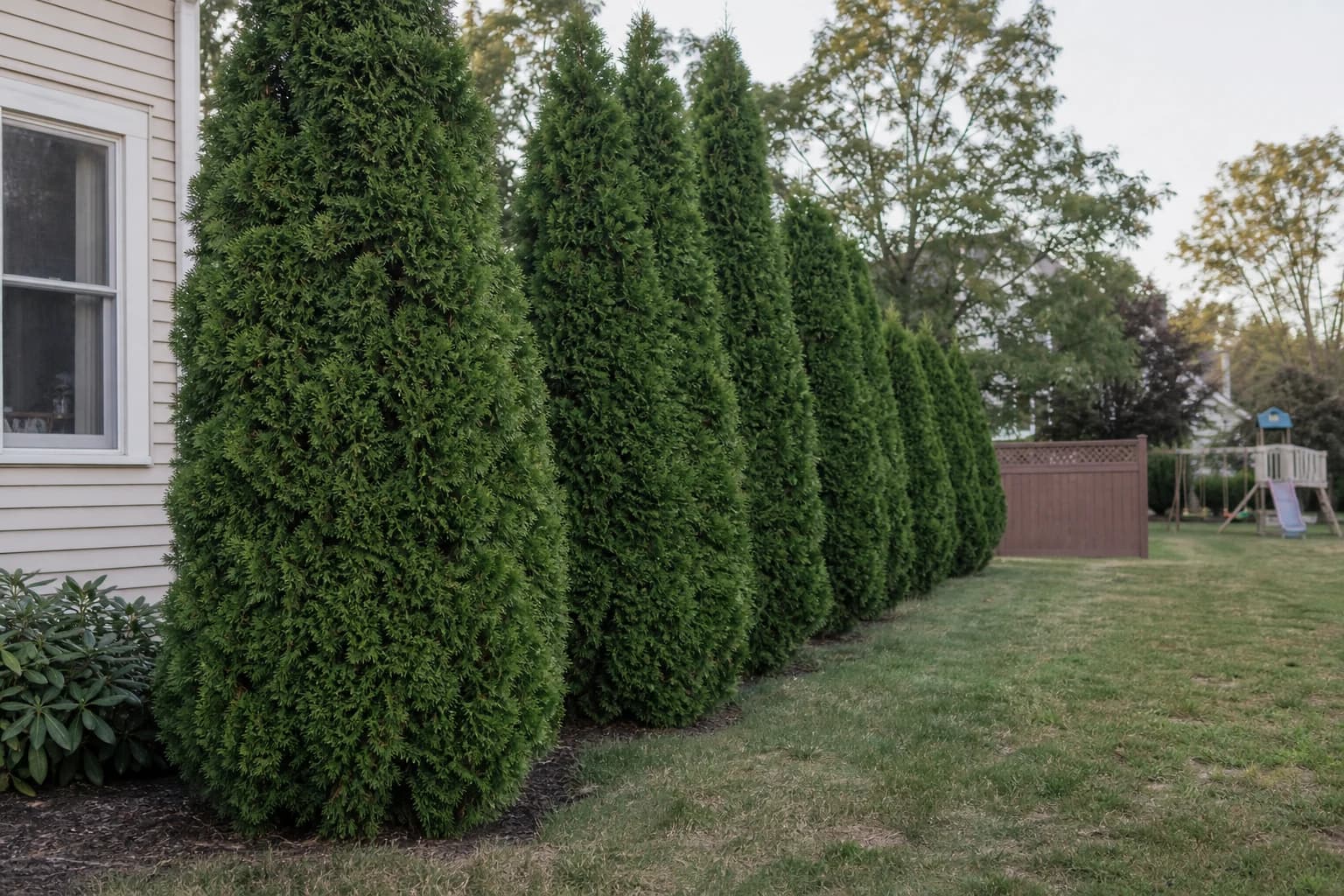
Green Giant arborvitae is the larger tree. It can create substantial height and year-round screening, but its documented mature width makes it a poor choice for some narrow residential spaces.
Emerald Green arborvitae stays much narrower and shorter. It works well where the homeowner wants a formal evergreen row without giving up the width required by Green Giants.
Neither is automatically better. A Green Giant squeezed between a patio and a fence can become the wrong tree even if it looked perfect at the nursery. An Emerald Green planted where the property needs a forty-foot screen may never solve the original problem.
Compare arborvitae spacing, layout, and tree counts.LARGE KENTUCKY PROPERTIES
A 26-Foot Spruce Is Not Just a Larger Version of a Six-Foot Tree
The Norway spruce arrived at approximately 26 to 27 feet tall. There were 45 of them.
At that size, choosing the tree was only the beginning. Our crew still had to move the root balls across a farm outside Paris, place each tree along the planned rows, and make sure irrigation reached every one. The same project included 68 oak and maple trees, creating 113 new trees across the property.
The Norway spruce created immediate evergreen structure along the drives and property edges. They worked because the property had room for trees of that size and the equipment needed to install them.
Norway spruce can be useful on large Kentucky properties, but it is not a narrow backyard tree. It needs considerable room, suitable soil, and a planting plan that accounts for long-term health as well as immediate impact.
See the 113-tree Paris farm project.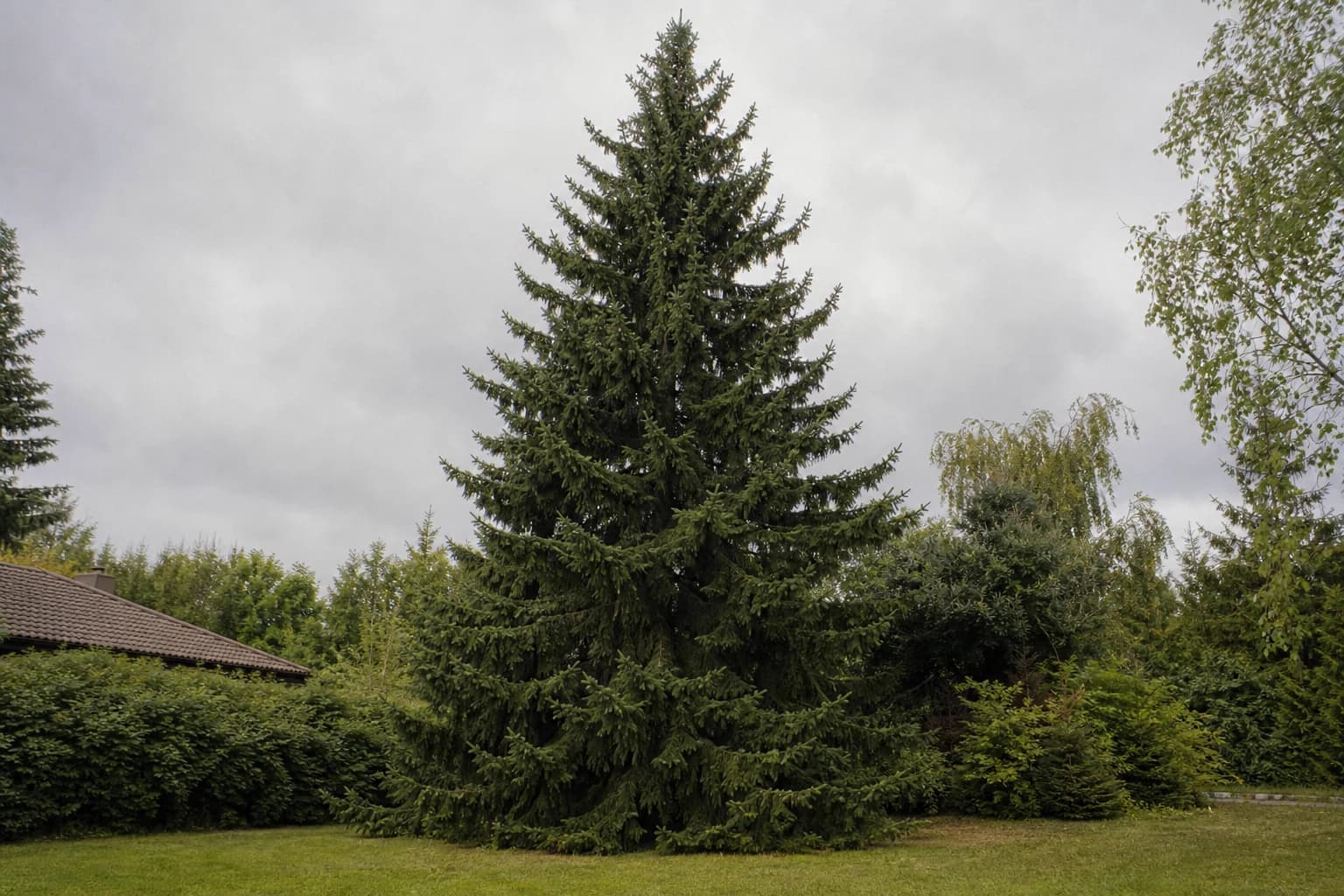
A NATIVE KENTUCKY OPTION
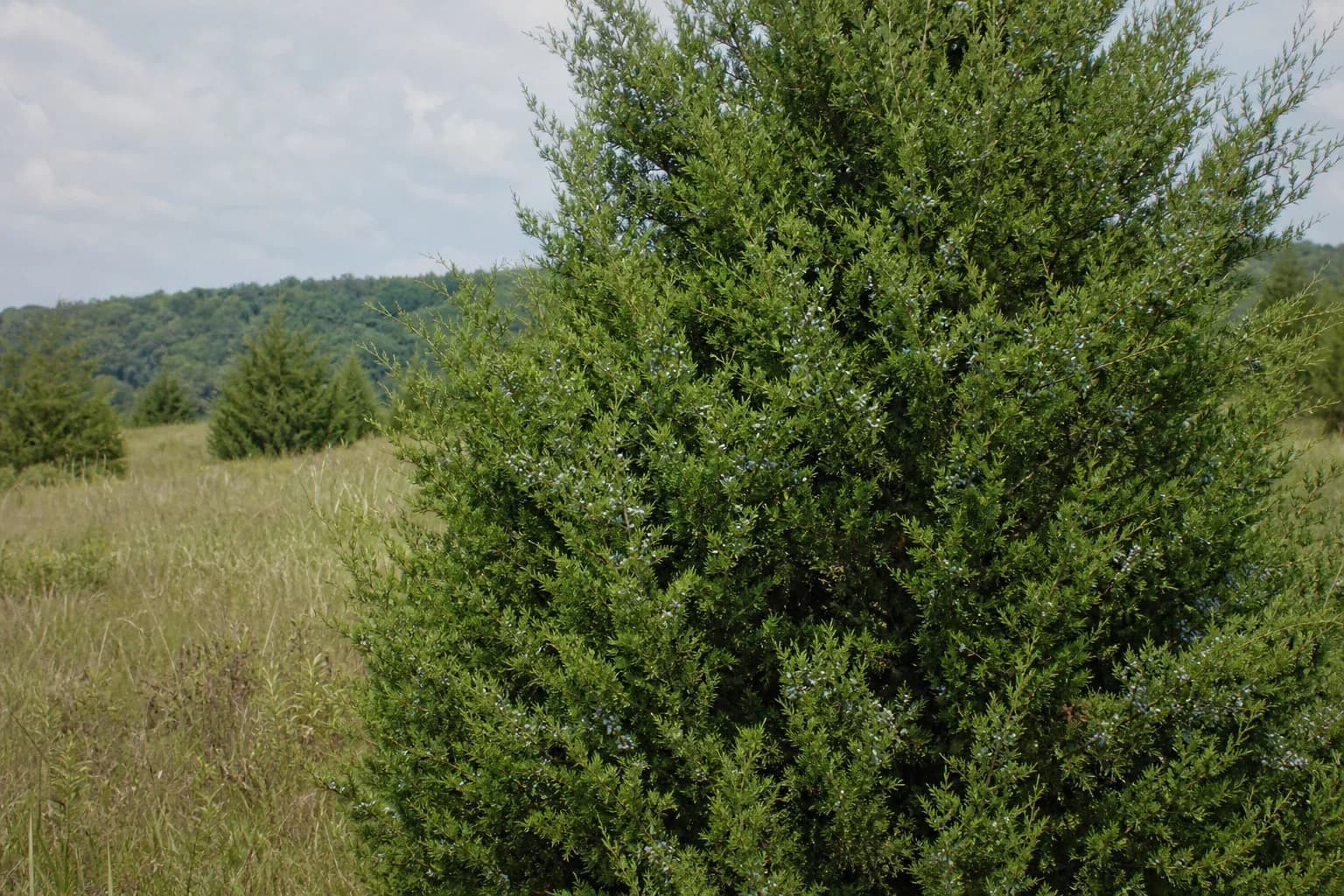
Eastern Redcedar Has Already Proven It Can Live Here
Eastern redcedar occurs throughout Kentucky and handles heat, dry conditions, poor soil, and exposed properties better than many imported evergreen trees.
It can fit farms, natural property edges, erosion-prone ground, and mixed screens where a perfectly uniform row is not the goal. Cultivars are available in narrower and more compact forms when the full species would become too large.
Eastern redcedar is not right everywhere. It does not want constantly wet soil, and cedar-apple rust should be considered when apples, crabapples, or related trees are nearby.
Read the University of Kentucky Eastern redcedar guidance.A SCREEN DOES NOT HAVE TO BE ONE STRAIGHT ROW
Sometimes a Mixed Evergreen Planting Is the Better Answer
A row of one cultivar creates a clean, formal appearance. It also means every tree shares many of the same weaknesses.
A mixed screen can combine evergreen trees with different heights, forms, and growth habits. Eastern redcedar, American holly, compatible evergreen cultivars, and shrubs can create a more natural property edge while reducing the chance that one pest, disease, or weather problem affects the entire planting.
Plant diversity does not require a wild or unplanned appearance. Larger trees can form the background while narrower trees and shrubs close lower openings.
Read the University of Maryland mixed-screen guidance.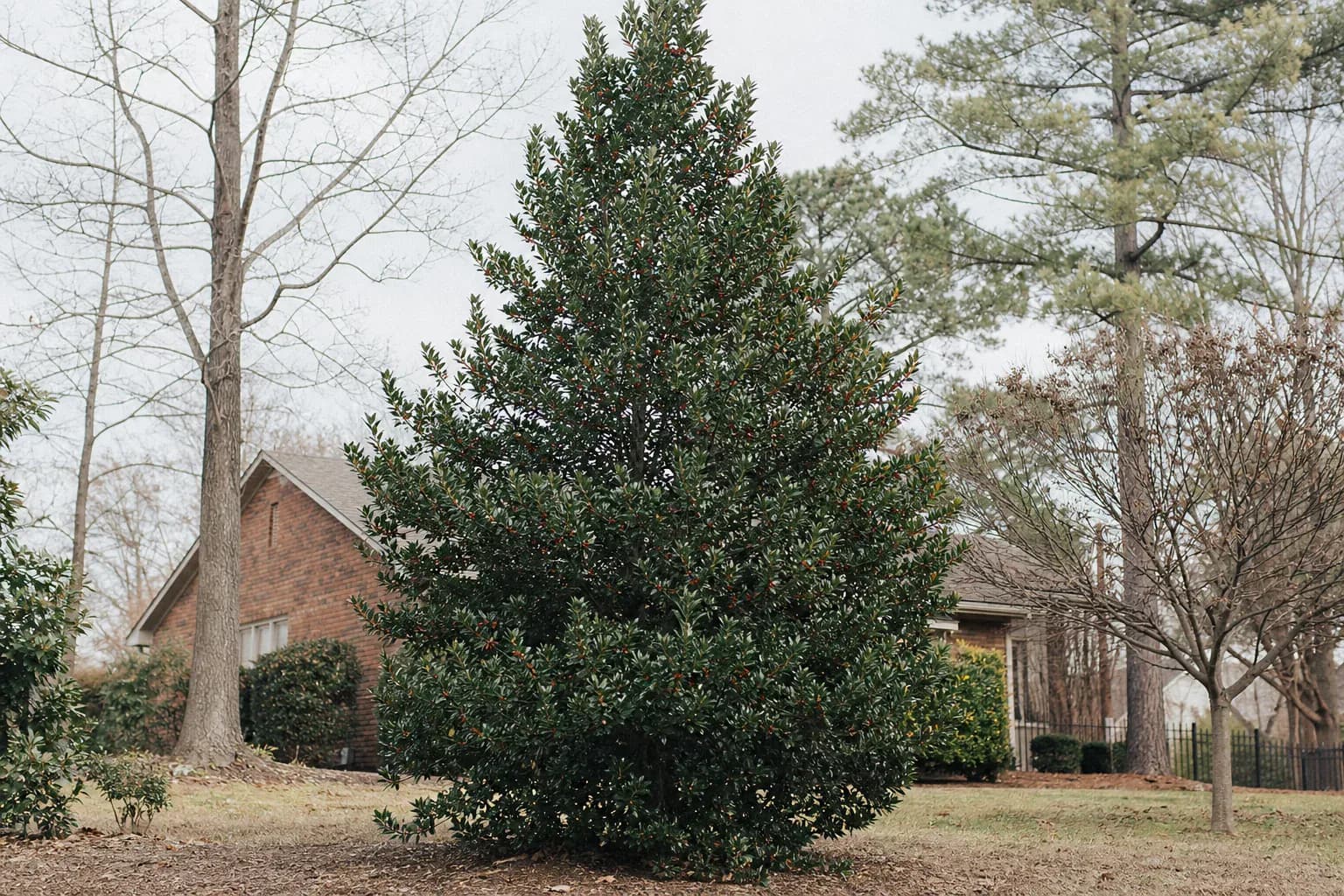
BEFORE ORLANDO RECOMMENDS AN EVERGREEN
Five Questions Narrow the Tree List
- 01
What needs to be blocked?
A road, patio, neighboring window, and open field require different heights and layouts.
- 02
How much width is available?
The measurement should account for the mature tree, not the tree standing at the nursery.
- 03
What happens after heavy rain?
An evergreen planted in soil that stays saturated can struggle regardless of how carefully the row is spaced.
- 04
What is above and beside the planting line?
Power lines, fences, buildings, gates, drives, and neighboring property affect the final position.
- 05
Who will water every tree?
A long privacy screen creates a long row of individual root balls. Each one needs dependable moisture during establishment.
FAST GROWTH DOES NOT GUARANTEE A GOOD KENTUCKY TREE
Three Trees We Would Not Treat as Automatic Answers
- 01
Leyland cypress
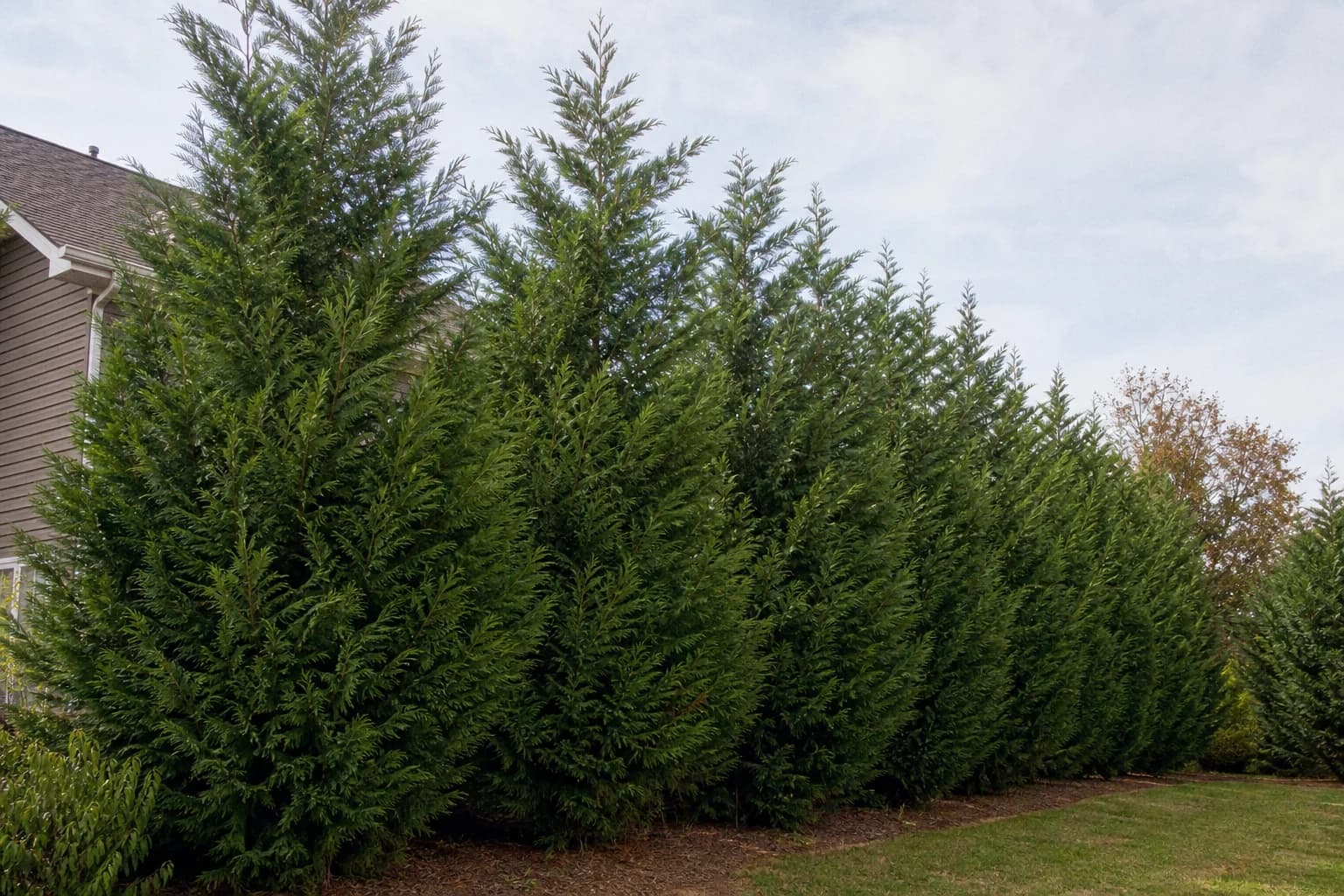
Leyland cypress is fast growing, but University of Kentucky guidance warns that it is not reliably hardy in Kentucky Zone 6 winters. Green Giant arborvitae is generally the safer comparison when the property has sufficient room.
Read the UK alternative-plant guidance. - 02
Eastern white pine
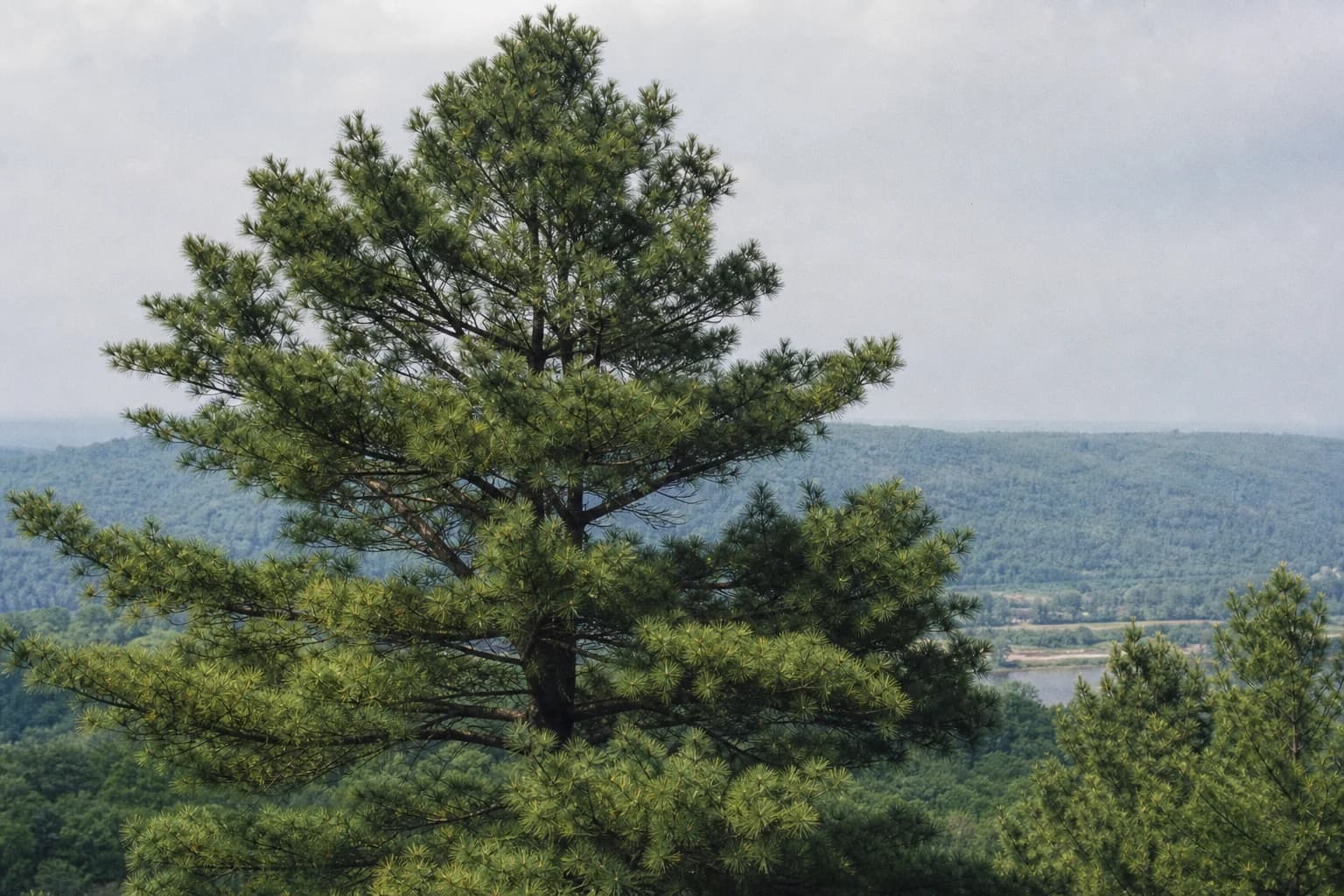
White pine can thrive on the right property, especially in loose, acidic, well-drained soil. Kentucky's high-pH clay and compacted landscape soils can contribute to long-term decline, so it should not be selected simply because it grows quickly.
Read the UK white pine guidance. - 03
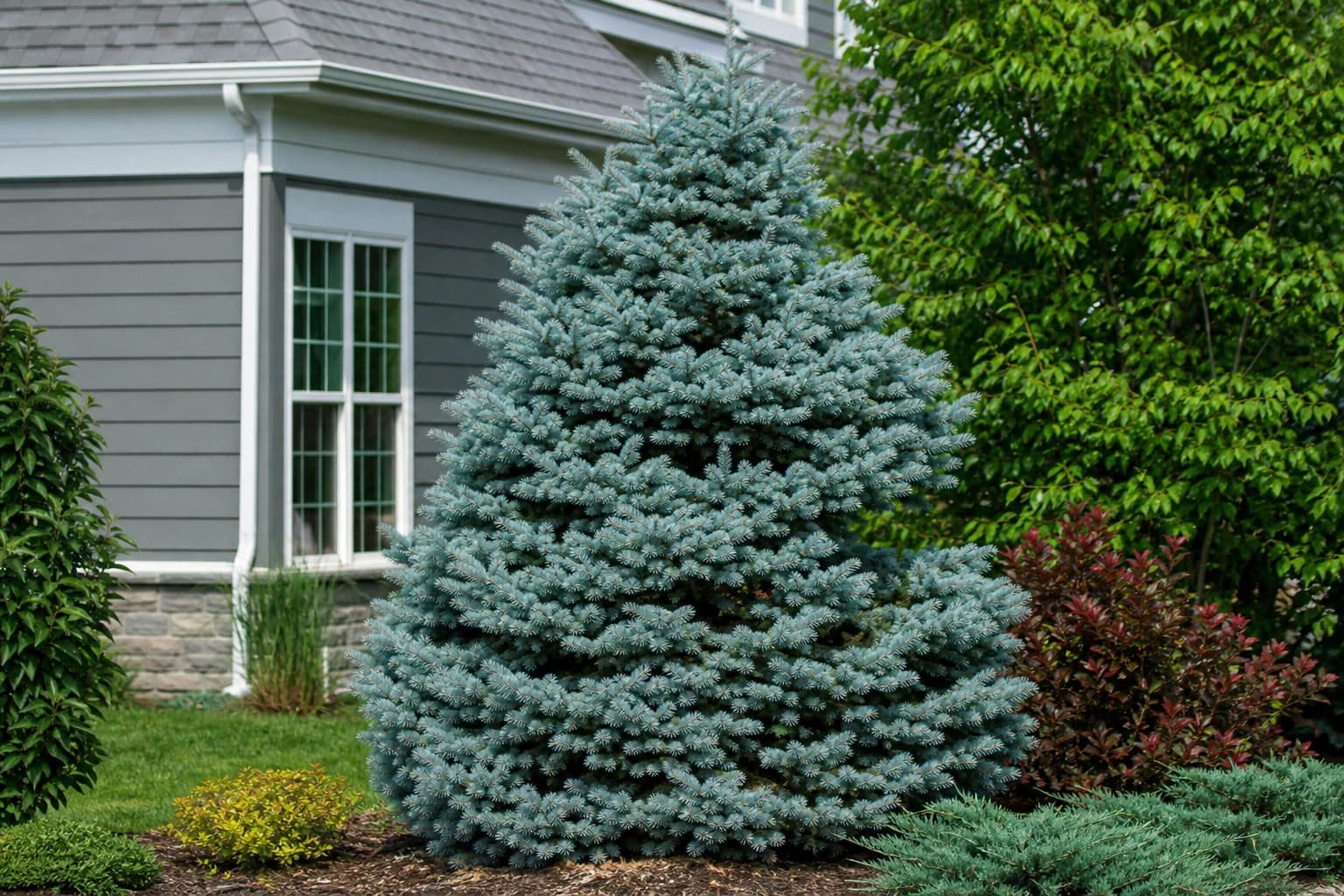
Blue spruce
Blue spruce is familiar and attractive, but Kentucky Extension documents needle cast, drought stress, cankers, mites, and other problems in Kentucky landscapes. It deserves a site-specific decision rather than an automatic place on every evergreen list.
Read the UK spruce guidance.
EVERGREENS STILL NEED AFTERCARE
Green Foliage Continues Losing Moisture in Winter
Evergreen foliage continues losing moisture after deciduous trees have dropped their leaves. Newly planted evergreens need consistent moisture through establishment, including during dry periods before the ground freezes.
The root ball should not be allowed to dry out, but the tree should not sit in saturated soil. Mulch helps conserve moisture when it is spread over the root area without being piled against the trunk.
Read the complete tree care and warranty guidance before planting.
FAQ
Common Questions
What is the fastest-growing evergreen tree for privacy in Kentucky?
Green Giant arborvitae is among the fastest common choices when conditions are suitable. Growth depends on the site and care, and its mature width means it needs considerably more room than Emerald Green arborvitae.
What is the best narrow evergreen tree for Kentucky?
Emerald Green arborvitae is a practical option for many narrow residential rows. It commonly matures around 12 to 14 feet tall and 3 to 4 feet wide, and it needs adequate moisture and protection from drying wind.
What evergreen trees are native to Kentucky?
Eastern redcedar and American holly are two native evergreen trees worth considering. Eastern redcedar can fit natural and rural screens, while American holly provides broadleaf evergreen foliage where the soil is suitable.
Is one evergreen species or a mixed screen better?
A single species creates a uniform row. A mixed screen can look more natural and reduce the risk of one pest, disease, or weather problem affecting every tree. The property and desired appearance should decide the layout.
Can evergreen trees grow in shade?
Some evergreen species tolerate partial shade, but foliage may become thinner when the planting receives too little light. The specific tree and the amount of direct sunlight should be reviewed before planning a dense privacy screen.
KENTUCKY HORTICULTURAL GUIDANCE
Sources Used for This Guide
Mature sizes and growing guidance are based on university and botanical-garden references, combined with our experience planting evergreen trees on Kentucky properties.
- University of Kentucky evergreen trees and cultivars
- University of Kentucky Eastern redcedar guidance
- NC State Extension Green Giant arborvitae profile
- Missouri Botanical Garden Emerald Green arborvitae profile
- NC State Extension American holly profile
- NC State Extension Norway spruce profile
- University of Maryland Extension mixed privacy-screen guidance
SHOW US THE VIEW YOU WANT TO CHANGE
You Do Not Need to Choose the Evergreen First
Send the property address, photos of the view or planting area, the approximate length available, and what you want the planting to accomplish. We can help compare the tree, mature size, starting size, layout, access, and installation scope.