
Mature Size and Growth Speed
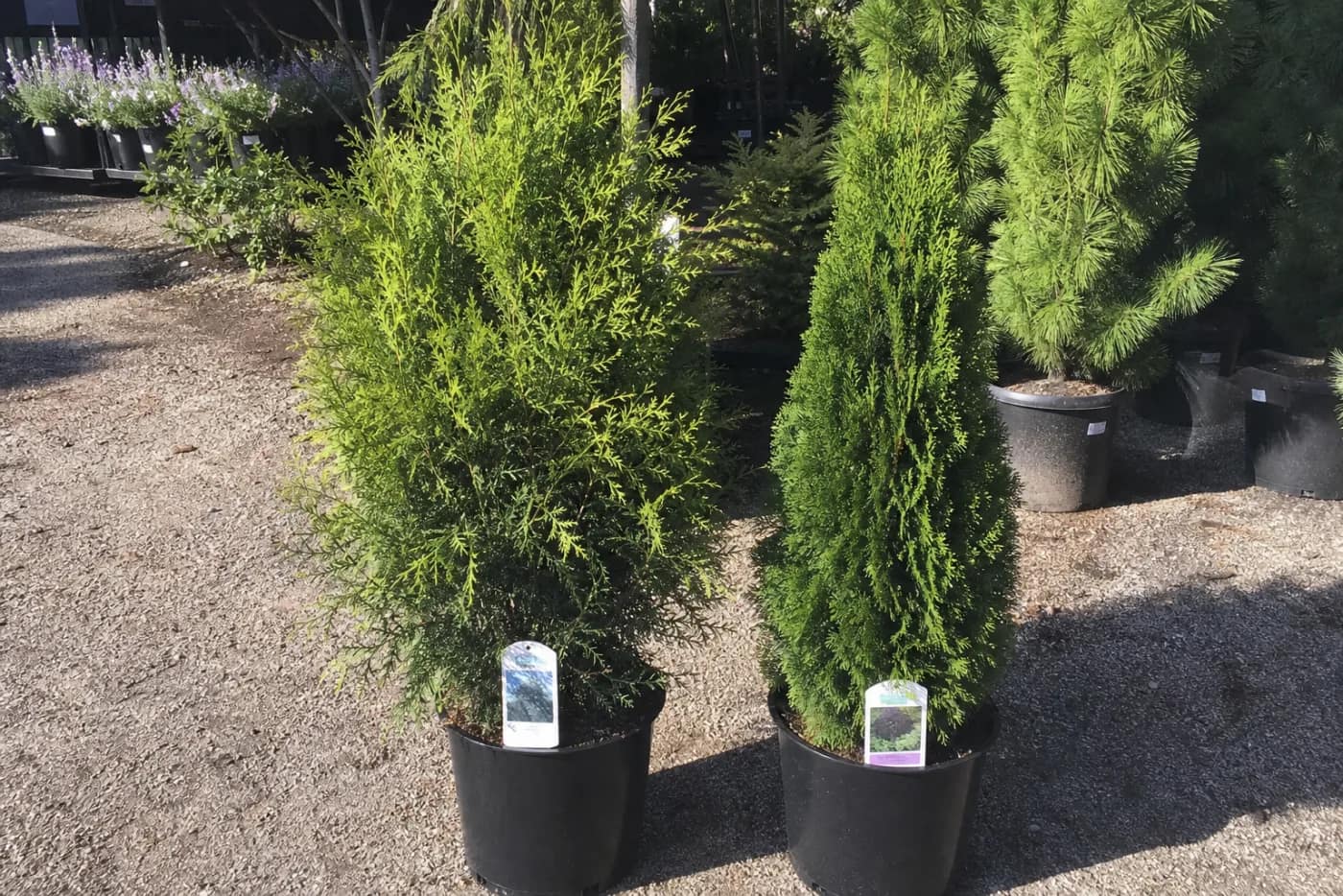
Green Giant arborvitae can grow up to 3 feet per year and reach 40+ feet tall. Emerald Green arborvitae grows slowly (6-9 inches a year) and typically caps out around 12-15 feet tall.
QUICK ANSWER
The Thuja Green Giant is the best arborvitae for Kentucky if you have a large yard and want rapid, tall privacy. The Emerald Green arborvitae is best for small yards, tight fences, and formal, narrow hedges.
Mature Size and Growth Speed: Green Giant arborvitae can grow up to 3 feet per year and reach 40+ feet tall. Emerald Green arborvitae grows slowly (6-9 inches a year) and typically caps out around 12-15 feet tall.
Privacy Hedge Comparison: A Green Giant privacy hedge is a massive, fluffy, wind-blocking wall perfect for a large rural property. An Emerald Green hedge is tight, formal, and ideal for blocking a neighbor's patio on a suburban subdivision lot.
Maintenance and Space: Green Giants require immense space; do not plant them under power lines. Emerald Green spacing allows them to fit tightly against foundations, but they are more susceptible to bagworms and deer pressure.
GUIDE
Green Giant arborvitae can grow up to 3 feet per year and reach 40+ feet tall. Emerald Green arborvitae grows slowly (6-9 inches a year) and typically caps out around 12-15 feet tall.
A Green Giant privacy hedge is a massive, fluffy, wind-blocking wall perfect for a large rural property. An Emerald Green hedge is tight, formal, and ideal for blocking a neighbor's patio on a suburban subdivision lot.
Green Giants require immense space; do not plant them under power lines. Emerald Green spacing allows them to fit tightly against foundations, but they are more susceptible to bagworms and deer pressure.
DECISION SUPPORT
Spacing should not only solve the first-year gap. The row also needs enough room for mature width, airflow, fence clearance, and future maintenance access.
Sun, drainage, deer pressure, available depth, and desired height can change whether a narrow arborvitae, a large evergreen, or a mixed screen is the stronger fit.
Photos help, but row length, corners, gates, utilities, slopes, and overhead lines determine the practical layout and the number of trees needed.
ESTIMATE PREP
NEXT STEP
Send the property location, photos, rough row length or tree count, and what problem the planting needs to solve.
RELATED SERVICES
Standard shade, ornamental, and property tree installation.
Large Specimen TreesBalled-and-burlapped trees, delivery, access, and equipment logistics.
Evergreen & Privacy TreesArborvitae rows, mixed evergreen screens, and property line privacy.
Shrub & Landscape PlantingFoundation shrubs, garden beds, ornamentals, and curb appeal planting.
Estate & Farm PlantingLarge-property planting for farms, estates, entrances, and acreage.
Commercial & HOA PlantingBusinesses, developments, community entrances, common areas, and buffers.
Nursery Trees & ShrubsPlant material sourcing and selection for installed planting projects.
FAQ
No. Green Giant needs room. It can be the wrong choice for narrow side yards or tight property lines.
It can be, especially in tighter spaces, but expectations about growth speed and final coverage should be realistic.
NEXT STEP
Send the property location, photos, rough row length or tree count, and what problem the planting needs to solve.