
Understanding HOA landscaping rules
Before purchasing privacy trees for subdivisions, review your HOA bylaws. Many neighborhoods explicitly ban certain fast-growing trees or require evergreen screening HOA approval before installation begins.
QUICK ANSWER
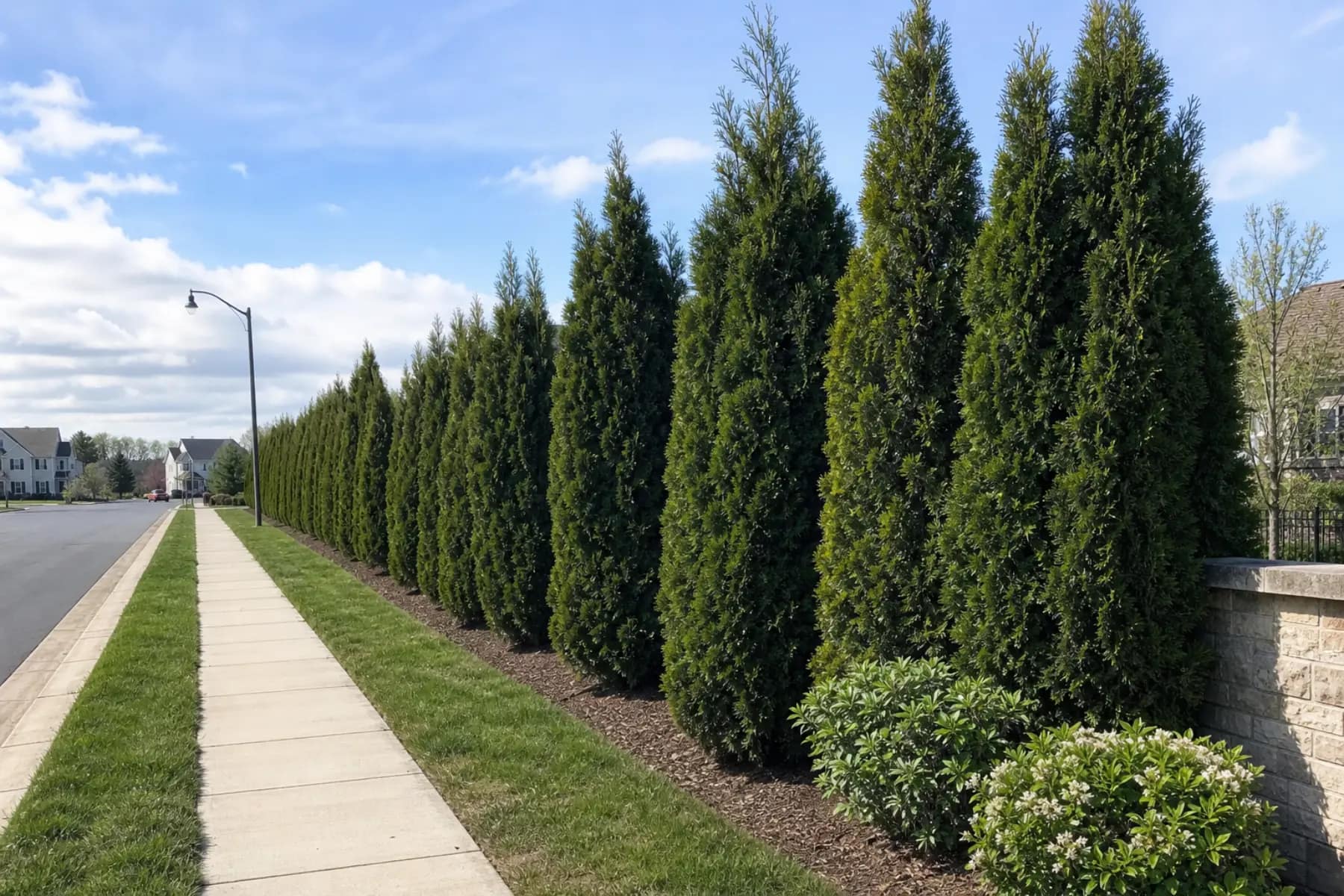
Planting a backyard privacy HOA screen requires following strict subdivision rules. You must review HOA approved privacy trees, verify fence line setbacks, and submit a documented quote showing mature heights before digging.
HOA screening needs a clear site scope before plant selection.
Road buffers, berms, and common areas may need phased work.
Watering and maintenance responsibility should be decided early.
GUIDE
Before purchasing privacy trees for subdivisions, review your HOA bylaws. Many neighborhoods explicitly ban certain fast-growing trees or require evergreen screening HOA approval before installation begins.
HOAs often restrict trees that will eventually block a neighbor's view or grow aggressively over property lines. Select columnar species like Emerald Green arborvitae that offer privacy without encroaching.
To get your project approved quickly, provide your HOA board with: 1) The exact species name, 2) The planting distance from the fence line, 3) The expected mature height and width, and 4) A professional quote documentation.
VISUAL GUIDE
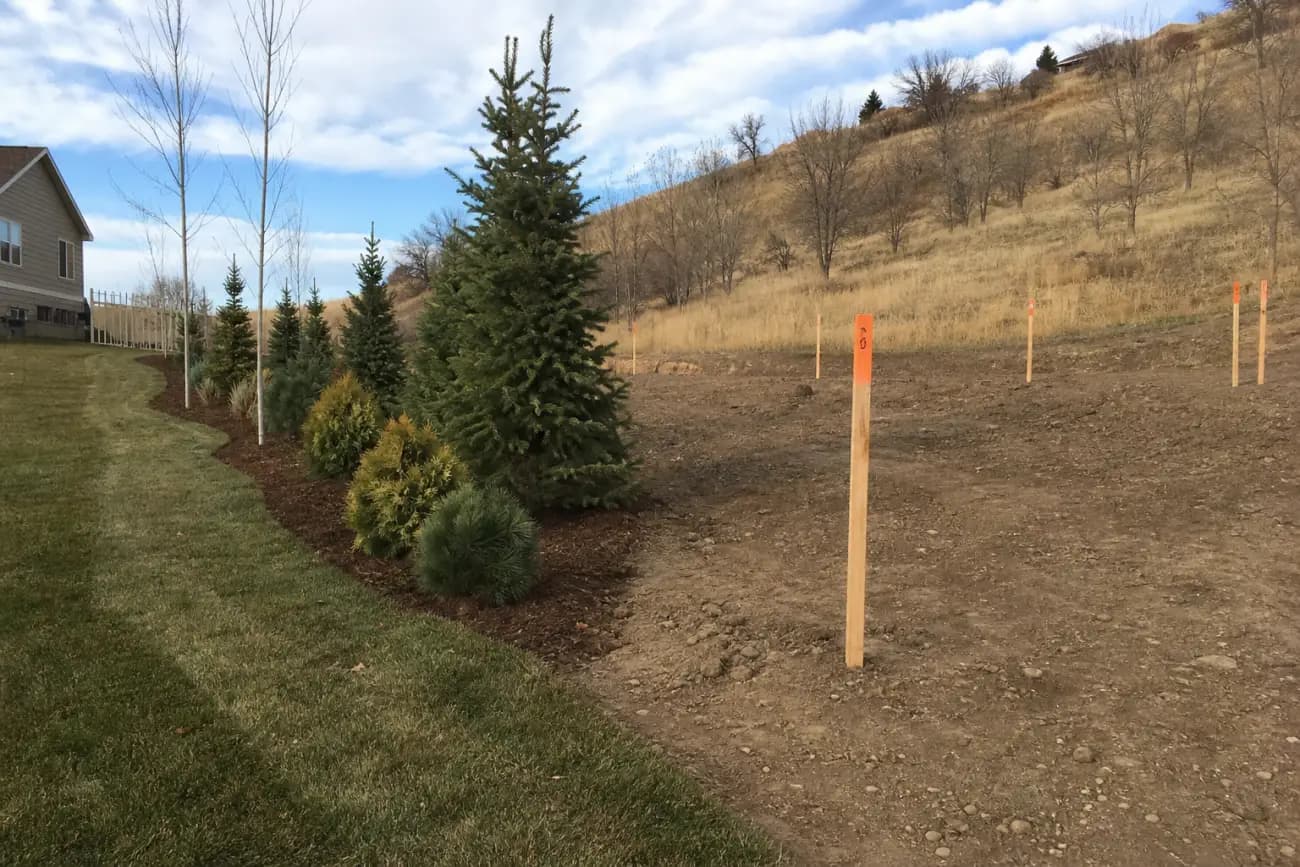
Large community screens can be planned in phases when budget, approvals, or access require it.
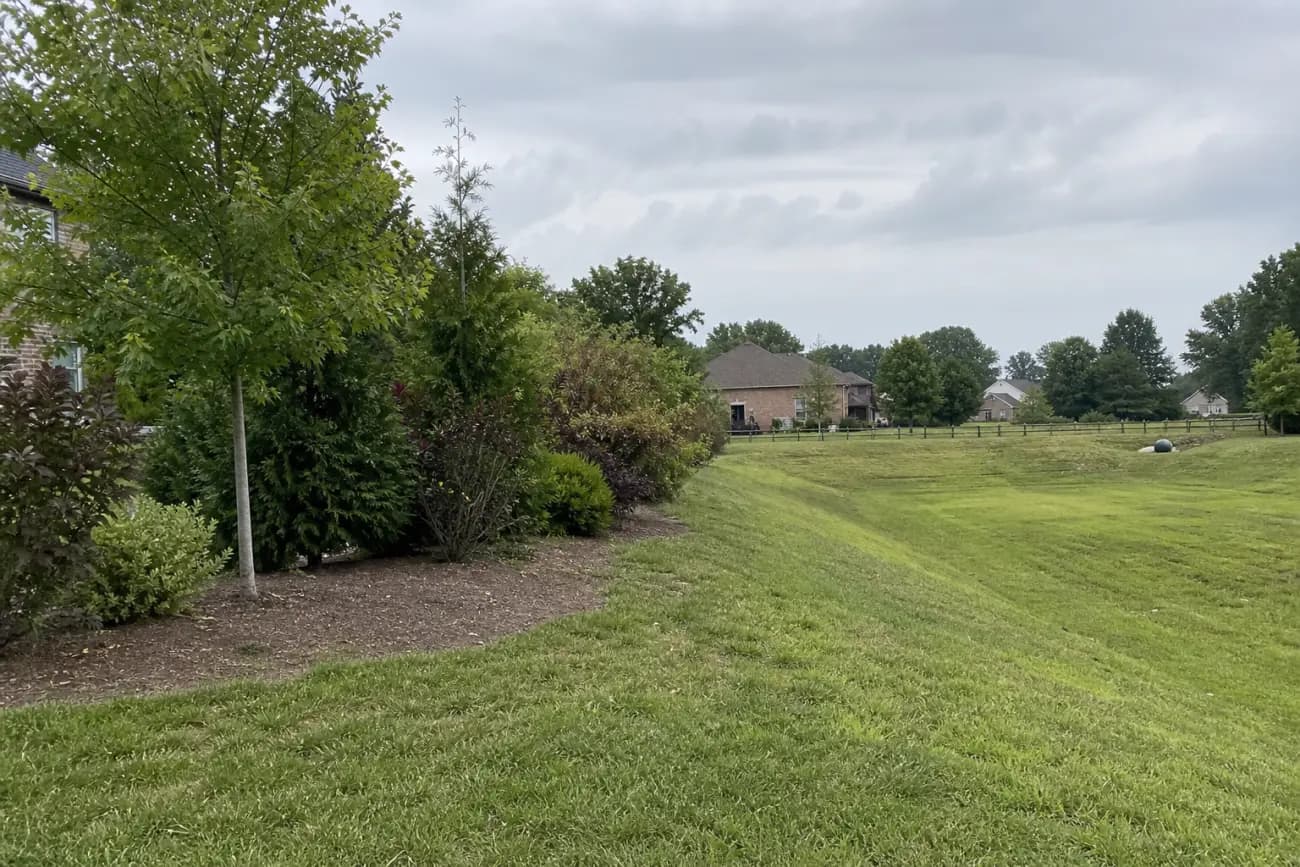
Detention basins and berms often need screening that respects drainage, slope, and maintenance access.
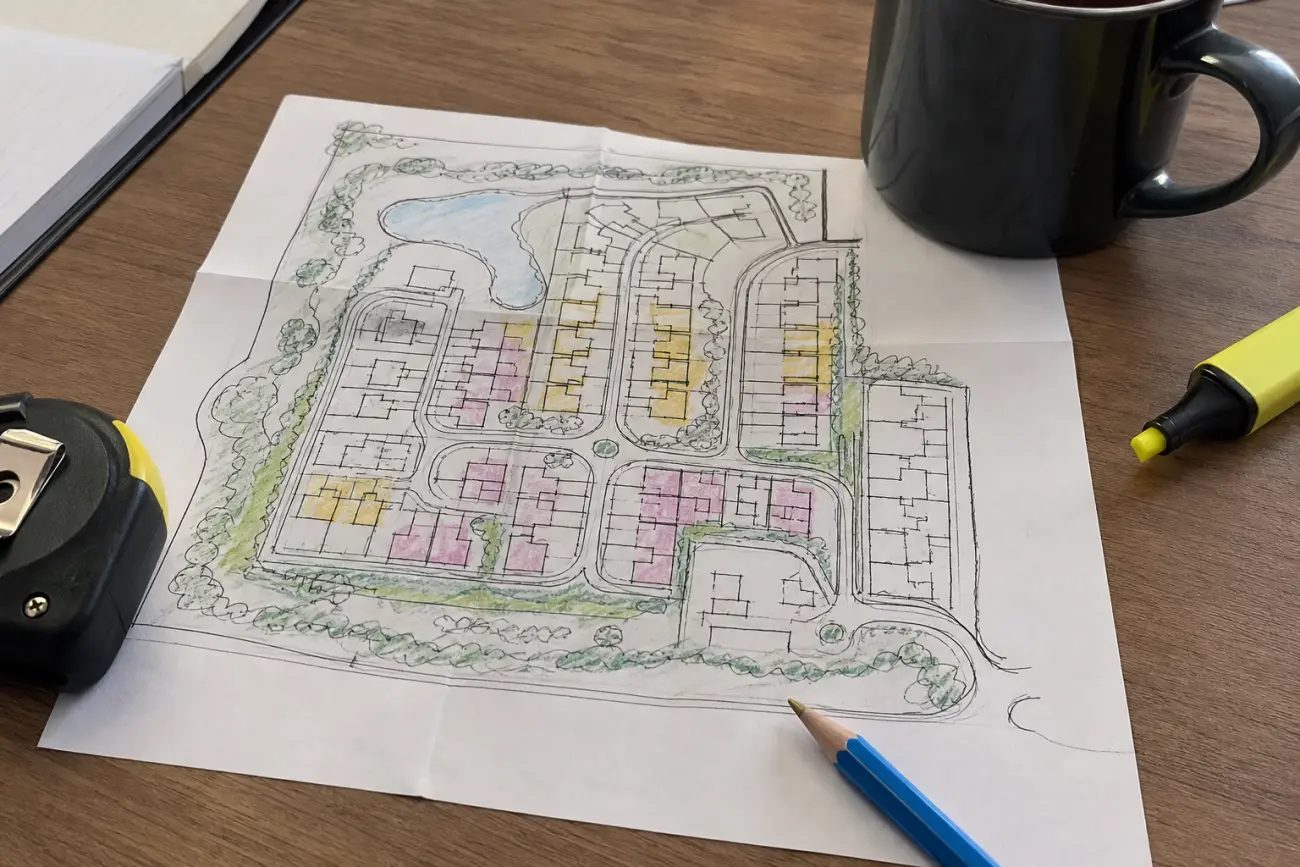
A marked site map helps everyone agree on scope before pricing and installation decisions.
DECISION SUPPORT
Spacing should not only solve the first-year gap. The row also needs enough room for mature width, airflow, fence clearance, and future maintenance access.
Sun, drainage, deer pressure, available depth, and desired height can change whether a narrow arborvitae, a large evergreen, or a mixed screen is the stronger fit.
Photos help, but row length, corners, gates, utilities, slopes, and overhead lines determine the practical layout and the number of trees needed.
ESTIMATE PREP
NEXT STEP
Send a site map, photos, linear footage, location, and approval timeline so we can understand the scope before estimating.
NEXT PAGES
Helpful for managed properties that need approval steps, clear scope, site coordination, and durable planting choices.
Evergreen & Privacy TreesReview privacy-screen options, evergreen layout choices, and site constraints before planning a row.
Privacy Tree Cost GuideCompare the budget, access, size, delivery, and installation factors that can change the planting scope.
RELATED SERVICES
Standard shade, ornamental, and property tree installation.
Large Specimen TreesBalled-and-burlapped trees, delivery, access, and equipment logistics.
Evergreen & Privacy TreesArborvitae rows, mixed evergreen screens, and property line privacy.
Shrub & Landscape PlantingFoundation shrubs, garden beds, ornamentals, and curb appeal planting.
Estate & Farm PlantingLarge-property planting for farms, estates, entrances, and acreage.
Commercial & HOA PlantingBusinesses, developments, community entrances, common areas, and buffers.
Nursery Trees & ShrubsPlant material sourcing and selection for installed planting projects.
FAQ
Yes. Phasing can make sense when the row is long, approvals are staged, budgets are split, or access and watering need to be managed carefully.
A site map, photos, approximate linear footage, decision-maker contact, approval timeline, and watering or maintenance plan make the estimate more useful.
NEXT STEP
Send a site map, photos, linear footage, location, and approval timeline so we can understand the scope before estimating.